Shipping used construction machinery from China requires careful planning, particularly when transporting excavators, loaders, forklifts, and other heavy equipment. Unlike ordinary consumer goods, second-hand machinery presents additional risks involving equipment identification, weight distribution, loading damage, and cargo securing.
For international buyers, container loading supervision helps verify that the correct machinery is loaded, properly documented, and handled according to agreed shipping requirements.
The following seven checks can help reduce loading-related risks before ocean freight.
1. Verify Machinery Identity and Specifications
One of the most important checks is confirming that the machinery being shipped matches the buyer’s purchase agreement.
Inspectors should verify:
- Manufacturer, model, and equipment type
- Serial number or vehicle identification number, where applicable
- Engine number, if required
- Year of manufacture and operating hours, where verifiable
- Included attachments and accessories
Photographs of identification plates, serial numbers, and overall equipment condition provide useful shipment records.
These checks help reduce the risk of incorrect equipment, missing accessories, or unauthorized substitution before loading.
2. Check Machinery Condition Before Loading
Used construction machinery may already have visible wear, corrosion, or mechanical damage.
Before loading, inspectors should document the equipment’s observable condition and compare it with previously approved inspection records.
Important checks include:
- Visible damage to the body, cabin, and frame
- Hydraulic oil or fuel leakage
- Condition of tracks, tires, and attachments
- Missing guards, covers, or components
- Loose or unsecured detachable parts
A loading inspection is not a substitute for a comprehensive mechanical evaluation. Buyers requiring detailed performance verification should arrange a separate used machinery inspection before shipment.
3. Inspect Container Suitability
Selecting an appropriate container is essential for transporting heavy machinery safely.
Smaller equipment may fit inside standard dry containers, while oversized machinery may require open-top containers, flat racks, or other specialized transport arrangements.
Before loading, inspectors should check the container’s visible condition, including:
- Structural damage, holes, or deformation
- Floor condition and apparent suitability
- Cleanliness and moisture
- Door operation and locking mechanisms
- Container identification number
The machinery’s dimensions and weight must also be checked against the container’s permitted payload and the approved loading plan.
4. Review the Loading and Weight Distribution Plan
Heavy machinery requires appropriate positioning to minimize movement and excessive loading stress during transportation.
The loading plan should consider equipment dimensions, center of gravity, axle or track loads, and available securing points.
Inspectors should verify that the loading team follows the approved plan and uses suitable handling equipment.
Particular attention should be given to concentrated floor loads and uneven weight distribution.
For heavy or unusually shaped equipment, the loading and securing arrangement should be prepared or approved by qualified cargo-securing professionals.
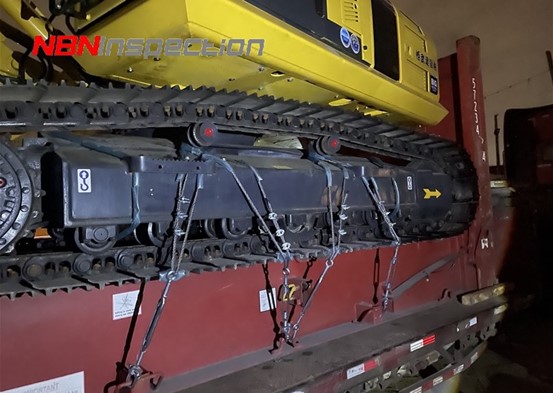
5. Check Cargo Securing and Protection
Improper securing can allow machinery to shift during ocean transportation, potentially causing serious damage.
During loading, inspectors should observe whether appropriate securing materials and methods are used.
Key inspection points include:
- Correct placement of chains, straps, and tensioning devices
- Suitable anchoring and lashing points
- Proper blocking, bracing, and wheel chocking
- Protection of vulnerable components
- Secure positioning of detached accessories
Cargo securing should follow the approved engineering plan and applicable transport requirements, including relevant principles of the IMO/ILO/UNECE CTU Code.
Inspectors should record visible deficiencies and request corrective action before shipment. Visual observation alone cannot establish the engineering adequacy of a securing arrangement.
6. Verify Shipping Documents and Prevent Substitution
Used machinery transactions may involve significant financial value, making accurate shipment identification especially important.
A structured third-party loading inspection provides independent records of the equipment presented for shipment.
Inspectors should compare the actual cargo with available purchase documents, packing lists, and shipping instructions.
Important records include machinery serial numbers, attachment quantities, container numbers, and loading photographs.
Any discrepancy should be reported to the buyer before loading continues.
Independent supervision can reduce substitution and documentation risks, although it cannot eliminate all forms of commercial fraud.
7. Confirm Final Loading and Container Sealing
Once loading and securing are completed, inspectors should conduct a final visual review before the container is closed.
The final checks should include:
- Machinery and accessories loaded as instructed
- No obvious unsecured components
- Loading and securing photographs completed
- Container number recorded correctly
- Seal number documented after sealing
- Outstanding discrepancies reported to the buyer
For open-top containers or flat racks, the applicable securing and handover arrangements should be documented instead of assuming a conventional container seal.
A complete loading report should include photographs, inspection findings, observed problems, and relevant shipment identification details.
Conclusion
Used construction machinery loading inspection is an important safeguard for buyers importing second-hand equipment from China.
By verifying machinery identity, documenting its condition, checking container suitability, and observing loading and securing procedures, buyers can reduce shipment errors and improve cargo traceability.
NBNQC provides independent container loading supervision services across mainland China, helping international buyers monitor loading activities and obtain clear photographic reports before shipment.