Denim shrinkage is a common quality concern in apparel manufacturing. When jeans, denim jackets, or other denim garments shrink excessively after washing, their fit, measurements, and overall appearance may no longer meet customer expectations. For clothing brands and importers, uncontrolled shrinkage can lead to customer complaints, product returns, and additional costs.
Understanding the factors that influence denim shrinkage helps manufacturers control garment dimensions and maintain consistent quality. From fabric composition and weaving structure to finishing treatments and washing conditions, each production stage can affect the final size of a denim garment.
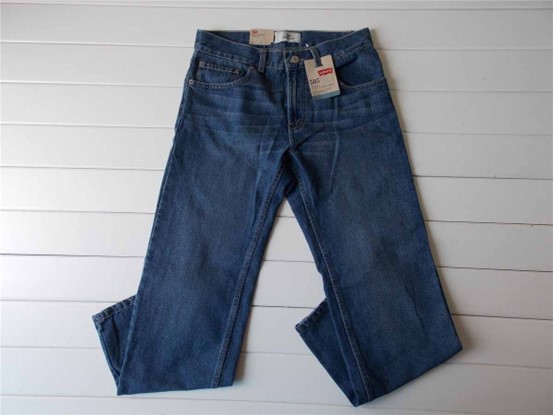
1. Fabric Composition and Structure
The composition and structure of denim fabric play a major role in determining its dimensional stability. Cotton denim is particularly susceptible to shrinkage because cotton fibers absorb moisture and swell during washing. As the fabric dries, the yarns relax and the woven structure may contract.
Fabric construction also matters. Yarn properties, weaving density, and the arrangement of warp and weft threads influence how much the fabric changes after washing. Shrinkage can differ between the lengthwise and widthwise directions, so both dimensions should be evaluated separately.
Stretch denim containing elastane introduces additional considerations. Its recovery properties can affect garment fit, while unsuitable washing or drying conditions may influence elasticity and dimensional stability.
Manufacturers should evaluate the actual fabric used for each style rather than relying on general assumptions about denim performance.
2. Weaving Direction and Fabric Tension
Denim is commonly produced using a twill weave, which creates its characteristic diagonal pattern. The interaction between yarn direction, twist, and fabric construction can influence dimensional changes during washing.
During spinning, weaving, dyeing, and finishing, yarns and fabric may be subjected to mechanical tension. Some of this tension remains in the material until subsequent wet processing or laundering allows the structure to relax.
When the fabric contracts unevenly, garments may become shorter or narrower than specified. In some cases, the legs of jeans may twist after washing, a problem commonly known as leg twisting or skewing.
To reduce these risks, manufacturers should evaluate shrinkage in both warp and weft directions and verify that fabric finishing provides consistent results. Pattern adjustments should account for the tested behavior of the fabric before bulk cutting begins.
3. Pre-Shrinking and Finishing Treatments
Pre-shrinking is an important method of controlling denim shrinkage. Sanforization, a mechanical compressive pre-shrinking process, reduces the fabric’s tendency to contract during subsequent washing.
However, pre-shrunk denim should not automatically be considered shrinkage-free. Residual dimensional changes may still occur, particularly when the fabric undergoes additional garment washing or is exposed to different laundering conditions.
Other finishing treatments, including rinsing, enzyme washing, stone washing, and bleaching, can also influence fabric dimensions. The effects depend on the process parameters, fabric construction, and combination of treatments used.
For this reason, denim fabric inspection should include reviewing the fabric specifications and confirming that shrinkage performance meets the buyer’s requirements before production starts.
Testing should also reflect the intended garment finish. A sample that passes before washing may behave differently after the actual bulk washing process.
4. Washing Temperature and Drying Conditions
Water and heat are two important factors affecting denim shrinkage. During washing, moisture allows cotton fibers and yarns to relax, while agitation can contribute to changes in the fabric structure. Higher temperatures and more intensive drying conditions may increase dimensional changes, depending on the material and process.
The number of washing cycles also matters. A garment may undergo further dimensional changes during repeated laundering, even if most shrinkage occurs during the first wash.
Manufacturers should therefore establish appropriate washing and drying conditions based on the product’s intended use and care instructions. Test results should be recorded and compared with the agreed dimensional tolerances.
5. Sewing Construction and Garment Manufacturing
Shrinkage control does not end with fabric selection. Sewing techniques, seam construction, and garment assembly can affect how dimensional changes appear in finished products.
Uneven seam tension, differences in seam thickness, and inconsistent stitching may contribute to puckering, distortion, or uneven contraction after washing. Poorly controlled cutting and pattern allowances can also produce garments that fall outside the required size specifications.
Factories should calculate pattern allowances using measured shrinkage data and verify the finished dimensions after washing. Consistent sewing methods and appropriate process controls help reduce variation between garments of the same style and size.
6. How to Test and Control Denim Shrinkage
A reliable quality control program should include shrinkage testing before bulk production and verification of finished garments.
A typical dimensional stability test involves measuring specified points on a fabric specimen or garment, washing and drying it under defined conditions, and measuring the same points again. The dimensional change is calculated as a percentage:
Shrinkage (%) = (Original measurement − Post-wash measurement) ÷ Original measurement × 100
For example, if a garment measurement decreases from 100 cm to 97 cm, the shrinkage rate is 3%.
Testing should follow an agreed method, such as the applicable procedures under ISO 5077 and ISO 6330, or AATCC TM135 for dimensional changes in home laundering. The selected method, washing conditions, and drying procedure must be appropriate for the product and buyer’s requirements.
During garment quality control, inspectors should verify garment measurements against the approved specification and identify any out-of-tolerance results. When shrinkage is a concern, testing should be conducted on finished, washed samples rather than relying exclusively on unwashed fabric results.
Conclusion
Denim shrinkage is influenced by fabric composition, weaving structure, residual tension, finishing treatments, washing conditions, and garment construction. Although shrinkage cannot always be eliminated, it can be managed through appropriate fabric selection, accurate pattern allowances, controlled processing, and systematic testing.
For buyers and manufacturers, the most effective approach is to define acceptable dimensional changes before production, verify fabric performance, and confirm finished garment measurements after washing. Combining these measures with consistent quality inspections helps ensure that denim products meet size specifications and maintain customer confidence.