A photovoltaic module may look perfectly acceptable when packed for export, yet contain problems that affect installation, electrical output, or long-term reliability. Damaged cells, defective connectors, inaccurate labeling, and weak packaging can create costly complications after the shipment reaches its destination.
For importers sourcing photovoltaic modules from Chinese manufacturers, independent solar panel inspection in China provides an opportunity to identify observable defects and verify important production information before shipment.
Start With the Approved Module Specifications
Solar panels are manufactured in different power ratings, dimensions, cell configurations, and electrical designs. Even visually similar modules may have significantly different performance characteristics.
Before inspection, buyers should provide the purchase order, approved datasheet, module drawings, bill of materials where applicable, and packaging requirements.
Inspectors can compare the actual products with these documents, checking model numbers, dimensions, frame construction, connector types, and identification labels.
Particular attention should be given to product substitutions. A module with a different power rating or connector specification may create installation problems even when its appearance is similar.
Look Beyond Obvious Surface Damage
Visual workmanship remains an important part of photovoltaic module inspection.
Typical concerns include scratched glass, damaged frames, uneven sealant, loose junction boxes, and visible contamination beneath the glass.
Inspectors should also examine accessible edges and corners for signs of poor assembly.
Small cosmetic imperfections may be acceptable under agreed criteria, while damaged glass, exposed electrical components, or compromised sealing can indicate more serious risks.
However, visual examination cannot reliably identify every internal cell crack or electrical defect.
This limitation makes supporting production test records particularly important.
Verify Electrical Performance Records
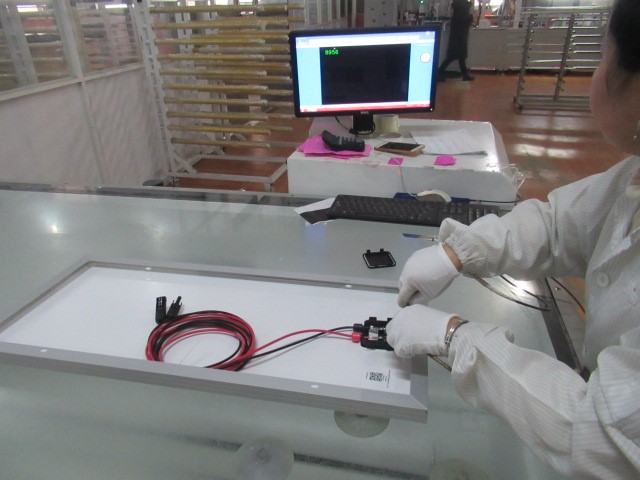
Photovoltaic modules are normally subjected to electrical testing during manufacturing.
One common method is the I-V curve test, which measures electrical characteristics under defined conditions.
Important parameters include maximum power (Pmax), open-circuit voltage (Voc), short-circuit current (Isc), and voltage and current at the maximum power point.
During a pre-shipment inspection, inspectors may review available factory test records and compare reported results with the approved specifications.
Where suitable calibrated equipment, qualified personnel, and agreed procedures are available, additional witnessed testing may be arranged.
Nevertheless, reviewing factory records is not equivalent to independently confirming electrical performance through accredited laboratory testing.
Understand the Role of Electroluminescence Testing
Electroluminescence (EL) imaging is widely used to detect certain internal defects that are difficult to observe visually.
These may include cell microcracks, electrically inactive regions, and damaged cell interconnections.
For buyers, EL test records can provide useful evidence of manufacturing consistency.
Inspectors may review available EL images, confirm their identification against module serial numbers, and check whether the factory has documented its acceptance criteria.
When significant abnormalities are discovered, buyers should request clarification and appropriate corrective actions.
EL testing requires specialized equipment and controlled conditions. It should not be assumed to form part of every routine factory inspection.
Examine Frames, Junction Boxes, and Connectors
Mechanical and electrical assembly details can affect installation reliability.
Inspectors should check frame dimensions, visible deformation, mounting holes, junction box attachment, cable condition, and connector identification.
Loose junction boxes, damaged cable insulation, or incompatible connectors may create functional or safety concerns.
For mounting components, inspectors can compare dimensions, material specifications, and visible workmanship with approved drawings.
Electrical safety performance, including insulation resistance and dielectric withstand requirements, should be verified through suitable testing procedures rather than visual inspection alone.
Packaging Is Part of Product Protection
Solar modules are large, fragile products that may experience repeated handling during transportation.
Even modules that pass production checks can be damaged by unsuitable packaging or improper loading.
Inspectors should examine pallet construction, protective separators, corner protection, carton markings, and securing arrangements.
Packaging should follow the manufacturer’s approved packing method and the buyer’s transportation requirements.
For container shipments, additional loading supervision may help verify pallet quantities, container condition, cargo arrangement, and sealing information.
Check Standards and Certification Documents
Photovoltaic modules intended for international markets may need to satisfy specific technical and regulatory requirements.
IEC 61215 addresses design qualification and type approval for terrestrial photovoltaic modules, while IEC 61730 covers photovoltaic module safety qualification.
Other requirements depend on the destination market, product configuration, and intended application.
Buyers should verify that relevant certificates and test reports correspond to the actual module models and applicable standard editions.
Routine quality control in China can include document consistency checks, but an inspection report does not replace certification or establish full regulatory compliance.
Choose Inspection Timing According to Risk
For new suppliers or unfamiliar module designs, inspection during production may help identify assembly problems before large quantities are completed.
Pre-shipment inspection focuses on finished products, available test documentation, identification, workmanship, and packaging.
For higher-risk orders, buyers may request additional testing, serial-number traceability checks, or more extensive verification.
NBNQC provides independent product inspection services across mainland China, helping international buyers verify solar product specifications, observable workmanship, packaging, and available production documentation within an agreed inspection scope.
By combining clear technical requirements, appropriate testing evidence, and independent inspection, buyers can make better-informed shipment decisions and reduce avoidable quality risks.