Shower hoses are exposed to continuous water pressure, temperature changes, bending, twisting, and repeated handling during everyday use. Although their construction may appear relatively simple, poor materials, weak connections, or inadequate assembly can lead to water leakage, corrosion, deformation, and premature failure.
For importers sourcing shower hoses from China, checking appearance alone is not enough. A reliable inspection should evaluate the hose structure, connection fittings, water-tightness, flexibility, and packaging against approved samples and product specifications.
A systematic shower hose inspection checklist helps buyers identify potential manufacturing problems before shipment and reduce the risk of customer complaints, returns, and product failures.
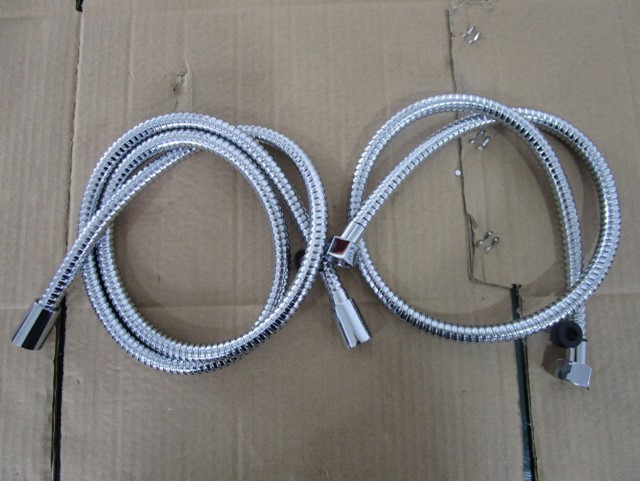
1. Check Materials and Overall Construction
Shower hoses are manufactured using different materials and structures, including stainless steel braided hoses, PVC hoses, and reinforced flexible hoses. Each type requires appropriate inspection criteria.
Inspectors should verify:
- Outer material: Check stainless steel braiding, PVC surfaces, or other protective layers for scratches, discoloration, cracks, and uneven finishing.
- Inner tube: Confirm that the internal hose material matches the approved specifications, where accessible or verifiable.
- Hose structure: Check for uneven braiding, loose wires, exposed reinforcement, deformation, and inconsistent diameter.
- Length and diameter: Measure the hose against the specified dimensions and tolerances.
- Surface condition: Look for sharp edges, rough areas, stains, and visible manufacturing defects.
Buyers should pay particular attention to material substitutions. A supplier may use a different grade of stainless steel, plastic compound, or reinforcement material without authorization. Material specifications should therefore be confirmed before mass production.
2. Inspect Connectors and Thread Compatibility
The connection fittings at both ends are critical components because they determine whether the hose can be properly installed and remain securely connected during use.
Important inspection points include:
- Verify that both connectors match the approved design and specifications.
- Check thread dimensions, pitch, and compatibility with the intended shower fittings.
- Examine the connector surfaces for scratches, dents, burrs, and damaged threads.
- Check whether nuts rotate smoothly and connect securely.
- Verify that washers and rubber sealing rings are present and correctly positioned.
- Examine the connection between the hose and fittings for looseness or visible gaps.
Incorrect thread dimensions or poorly assembled connectors may cause installation difficulties and water leakage, even when the hose itself is manufactured correctly.
3. Conduct Water Pressure and Leakage Tests
Pressure resistance and water-tightness are among the most important performance requirements for shower hoses.
A practical inspection should include the following checks:
Water leakage test: Connect the hose to an appropriate testing fixture and run water through it. Examine the entire hose, particularly the connection points, for dripping, leakage, or abnormal water discharge.
Pressure resistance test: Apply the specified water pressure using suitable testing equipment. Verify whether the hose maintains its structural integrity without bursting, swelling, or leaking.
Connection sealing test: Pay particular attention to both ends of the hose, where inadequate sealing or incorrect washer installation may cause leakage.
The test pressure, holding time, and acceptance criteria should follow the buyer’s specifications or applicable product requirements. Inspectors should record the actual test conditions and results rather than relying on an undefined pass/fail judgment.
4. Check Flexibility, Bending, and Twisting Resistance
Shower hoses are frequently bent and repositioned during normal use. Insufficient flexibility or poor structural design may result in deformation, kinking, or damage to the inner tube.
Recommended checks include:
- Bend the hose to evaluate its flexibility under normal handling conditions.
- Check whether it returns to its original shape after bending.
- Observe whether the hose develops permanent deformation or visible cracks.
- Twist the hose gently to identify abnormal stiffness or structural instability.
- Check whether the outer reinforcement becomes loose or separates during handling.
For products with specific durability requirements, buyers may request repeated bending or twisting tests using a defined procedure. Such tests should specify the number of cycles, bending radius, and acceptance criteria.
5. Examine Surface Finish and Corrosion Resistance
For stainless steel braided shower hoses, surface finishing and corrosion resistance are important considerations. Metal connectors may also have chrome plating or other protective finishes.
Inspectors should examine:
- Uniformity of the stainless steel braiding.
- Rust, oxidation, and discoloration.
- Chrome plating quality and surface consistency.
- Scratches, peeling, and exposed base materials.
- Corrosion around connector joints and other metal components.
Basic visual inspection can identify existing corrosion and finishing defects, but it cannot establish long-term corrosion resistance. Where required, buyers should arrange appropriate salt spray or other laboratory testing based on the material and intended application.
6. Verify Dimensions, Accessories, and Packaging
Before shipment, inspectors should confirm that the finished products match the purchase order and approved packaging requirements.
Key checks include:
- Hose length and overall dimensions.
- Connector type, size, and configuration.
- Quantity and completeness of sealing washers and other accessories.
- Product labels, model numbers, and barcode information.
- Individual packaging and protective materials.
- Retail box condition, shipping marks, and carton quantities.
Inspectors should also verify that products are packed securely to prevent scratches, deformation, or damage to connectors during transportation.
7. Apply Appropriate Sampling and Defect Classification
For routine shower hose shipments, buyers can use ISO 2859-1 (ANSI/ASQ Z1.4) random sampling plans. General Inspection Level II is commonly used to determine the sample size according to the shipment quantity.
A typical AQL arrangement is:
- Critical defects: AQL 0
- Major defects: AQL 2.5
- Minor defects: AQL 4.0
Critical defects may include serious safety-related problems, while major defects may involve leakage, failed pressure tests, or incompatible connectors. Minor defects generally include less significant cosmetic imperfections.
The actual classification should be agreed upon before inspection. Buyers should also specify which performance tests must be conducted on sampled units and whether additional laboratory testing is required.
Conclusion
Shower hose quality depends on more than material appearance and assembly workmanship. Water pressure resistance, leakage prevention, connector compatibility, flexibility, and corrosion resistance all contribute to product reliability.
By establishing clear specifications and arranging independent inspections before shipment, buyers can identify manufacturing problems and make better-informed purchasing decisions. NBNQC provides third-party inspection services across mainland China, helping importers verify shower hoses and other bathroom products against their requirements before shipment.