Paper products are widely used in packaging, stationery, printing, retail displays, and household applications. Although these products may appear simple, variations in paper thickness, printing quality, cutting accuracy, and moisture exposure can create significant quality problems.
For importers sourcing paper products from China, identifying manufacturing defects before shipment helps reduce customer complaints, packaging failures, and costly returns.
The following seven inspection points cover essential quality requirements for finished paper products.
1. Verify Paper Materials and Grammage
Paper quality begins with selecting the correct materials.
Products may be manufactured from kraft paper, coated paper, cardboard, corrugated board, or specialty paper, depending on their intended applications.
Inspectors should verify:
- Paper type and approved material specifications
- Grammage in grams per square meter (GSM)
- Paper thickness and consistency
- Surface texture and coating quality
- Visible contamination or material defects
During paper products quality inspection, inspectors should compare production samples with approved references and purchase specifications.
Grammage may be measured according to ISO 536, while thickness testing may follow ISO 534 when appropriate equipment and testing conditions are available.
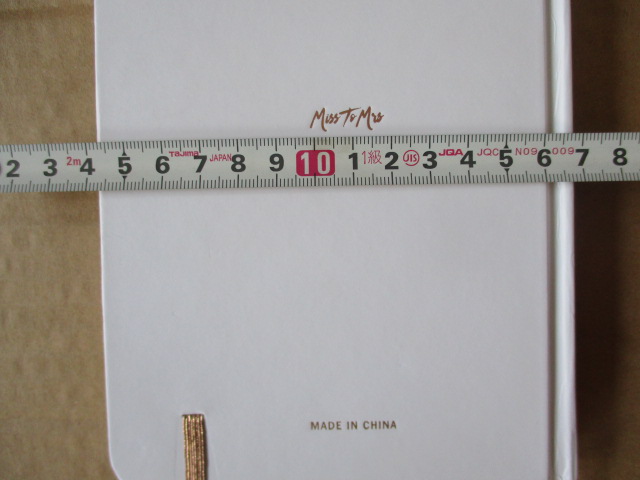
2. Check Dimensions and Cutting Accuracy
Dimensional accuracy is essential for printed materials, stationery, packaging inserts, and paperboard products.
Incorrect cutting dimensions can cause assembly problems, poor presentation, or incompatibility with packaging equipment.
Common checkpoints include:
- Overall length and width
- Cutting tolerances
- Squareness and edge alignment
- Hole positions and perforations
- Folding lines and creasing accuracy
Inspectors should use suitable measuring tools and compare results with approved drawings.
Uneven cutting, rough edges, and misaligned perforations should be recorded according to the agreed defect criteria.
3. Evaluate Printing Quality and Color Consistency
Printing defects are among the most visible problems in finished paper products.
Common issues include:
- Color variation between production batches
- Blurred text or graphics
- Incorrect artwork or missing information
- Ink smudges and stains
- Misregistration between printed colors
- Uneven ink coverage
Inspectors should compare printed products with approved artwork, color references, and production samples.
During printing quality control, special attention should be given to logos, product descriptions, barcodes, and mandatory labeling information.
Color evaluation should use agreed viewing conditions. Quantitative color measurements may require appropriate instruments and defined tolerances.
4. Inspect Folding, Gluing, and Assembly
Many paper products require folding, adhesive bonding, or mechanical assembly.
Poor workmanship may affect both appearance and functionality.
Inspectors should examine:
- Folding accuracy and alignment
- Glue application and bonding consistency
- Loose or separated joints
- Wrinkles and surface deformation
- Incorrect assembly orientation
- Damaged corners and edges
For paper bags, boxes, folders, and other assembled products, functional checks should reflect the intended use.
Adhesive strength and structural performance may require specific test methods and equipment.
5. Check Moisture, Warping, and Surface Defects
Paper is sensitive to humidity and environmental conditions.
Excessive moisture exposure may cause curling, warping, wrinkles, mold growth, or reduced mechanical performance.
Inspectors should check finished products for:
- Curled or distorted sheets
- Water stains and discoloration
- Mold or unusual odors
- Surface scratches and scuffing
- Delamination or coating separation
- Damaged edges and corners
Where moisture content is a critical requirement, buyers should define acceptable limits and appropriate testing methods.
Visual inspection can identify obvious moisture-related damage but cannot establish precise moisture content without suitable measurement procedures.
6. Verify Functional Performance and Applicable Standards
Performance requirements vary significantly between paper product categories.
For example, paper bags may require handle strength checks, while packaging boxes may need compression or stacking performance testing.
Relevant evaluation methods may include:
- ISO 536 for paper and board grammage
- ISO 534 for thickness and density-related measurements
- ISO 187 for conditioning paper and board samples
- Appropriate strength, absorption, or packaging performance tests
Buyers should select standards according to the specific product and intended application.
For food-contact paper products, additional material safety and regulatory requirements may apply.
Routine pre-shipment inspection can verify observable characteristics and review available test reports, but specialized laboratory testing may be necessary for chemical compliance or advanced performance verification.
7. Inspect Packaging and Shipment Readiness
Paper products can be damaged during transportation through compression, moisture exposure, or improper handling.
Before shipment, inspectors should verify:
- Correct product quantities and assortments
- Protective wrapping and inner packaging
- Carton strength and condition
- Accurate labels and shipping marks
- Barcode readability
- Appropriate moisture protection where specified
Random sampling may follow ISO 2859-1 or ANSI/ASQ Z1.4, using the agreed inspection level and AQL values.
Defects should be classified according to their impact on appearance, functionality, and customer acceptance.
Conclusion
Effective paper products inspection requires attention to material specifications, grammage, dimensions, printing accuracy, assembly quality, moisture-related defects, and packaging protection.
By establishing measurable acceptance criteria and arranging independent inspection before shipment, buyers can identify quality problems while corrective action remains possible.
NBNQC provides independent inspection services across mainland China, helping international buyers evaluate finished paper products against approved specifications and make informed shipment decisions.