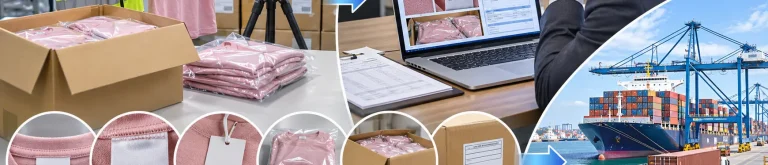
The first products coming off a manufacturing line can reveal problems that may affect an entire order. A small difference in material, dimensions, color, or assembly may appear manageable at the beginning, but repeating the same mistake across thousands of units can lead to costly rework and delivery delays.
For importers working with overseas manufacturers, an Initial Production Check (IPC) provides an opportunity to identify these risks while production is still at an early stage.
Rather than waiting until finished goods are packed, buyers can use early inspection findings to determine whether manufacturing is following approved requirements.
Why the First Production Units Matter
Factories often manufacture pre-production samples before starting bulk orders. However, an approved sample does not automatically guarantee that mass production will follow the same specifications.
Differences may arise when factories change material suppliers, adjust equipment settings, assign different operators, or substitute components.
For example, a furniture manufacturer may produce an approved sample using the correct hardware, but the first production batch may contain screws of a different specification.
Similarly, a garment factory may use the approved fabric while applying incorrect measurement tolerances during cutting.
These problems are easier to investigate when only a limited quantity has been manufactured.
The purpose of an IPC is to compare actual production conditions and initial products with the buyer’s requirements before mistakes spread.
What Should Be Verified Before Production Advances?
An effective early-stage inspection focuses on characteristics that could affect the entire manufacturing batch.
Material and Component Consistency
Inspectors verify whether available raw materials, components, colors, finishes, and accessories match approved specifications.
Material identification records and supplier documentation may also be reviewed when required.
First Production Samples
Initial finished or semi-finished products are examined for workmanship, dimensions, appearance, assembly, and applicable functional requirements.
These checks help reveal differences between approved samples and actual manufacturing output.
Production Instructions
Incorrect drawings, outdated specifications, or misunderstood assembly instructions can create repeated defects.
Inspectors may compare the documents used on the production floor with the latest approved requirements supplied by the buyer.
Critical Manufacturing Processes
Where included in the inspection scope, relevant production conditions can be observed to identify visible problems with handling, assembly, finishing, or process consistency.
For buyers arranging initial production inspection in China, these checks provide useful evidence about whether manufacturing has started according to plan.
Three Early Mistakes That Can Affect an Entire Order
Some manufacturing problems deserve particular attention because their consequences increase as production continues.
Using the Wrong Material Specification
A supplier may unintentionally use an incorrect fabric composition, plastic grade, metal thickness, or electronic component.
Even when finished products look acceptable, material differences can affect durability, functionality, or compliance.
Inspectors can compare material markings, specifications, and available records. Laboratory testing may be required when material composition cannot be verified through on-site checks.
Producing Against an Outdated Sample
Factories sometimes retain earlier product versions after the buyer approves design changes.
If operators follow outdated samples or drawings, entire batches may contain incorrect dimensions, accessories, colors, or construction details.
Clear version control and approved reference samples help prevent these mistakes.
Overlooking Problems in Initial Assembly
Small assembly errors can become recurring defects when production continues without adjustment.
Examples include incorrectly positioned components, unsuitable fastening methods, and inconsistent product alignment.
Checking early production units allows the buyer to request corrective action before larger quantities are affected.
What Happens When an IPC Identifies a Problem?
An inspection report should help buyers decide what needs attention before production progresses further.
If inspectors identify a significant specification deviation, the supplier should investigate the cause and determine which products or materials are affected.
Corrective action may involve replacing components, updating production instructions, adjusting equipment, or reworking completed units.
Buyers should request supporting evidence and, when necessary, arrange follow-up verification.
Independent quality control in China can help buyers obtain objective findings, particularly when they cannot visit the factory themselves.
However, inspectors report their observations and test results; responsibility for implementing corrective actions remains with the manufacturer.
When Is an Initial Production Check Most Valuable?
IPC is generally performed when production is beginning, typically within the first 0%–20% of the manufacturing process, provided suitable materials or initial production samples are available.
It is particularly useful for new suppliers, newly developed products, complex assemblies, and orders involving strict dimensional or material requirements.
Buyers should arrange the inspection early enough to allow meaningful corrective action, but not so early that there is nothing representative to examine.
An IPC does not replace a during production inspection or final shipment inspection. Manufacturing conditions can change, and products made later may develop different defects.
Instead, IPC provides an early checkpoint within a broader quality assurance process.
A Better Start Leads to Better Production Control
Manufacturing quality problems often begin with small discrepancies that remain unnoticed until production reaches a larger scale.
An Initial Production Check helps importers identify these discrepancies, clarify specifications, and request corrective action while the order is still manageable.
By checking the first production units and relevant manufacturing conditions, buyers gain better visibility into potential risks before committing to the remaining production quantity.
NBNQC provides independent Initial Production Check services across mainland China, helping international buyers verify early manufacturing quality against approved specifications and agreed inspection requirements.