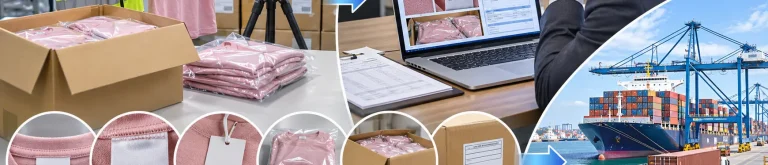
Discovering non-conforming products during a quality inspection can create serious challenges for importers, particularly when shipment deadlines are approaching. Defective workmanship, incorrect dimensions, functional failures, or packaging discrepancies may require corrective action before goods can be released.
For buyers sourcing products from China, identifying defects is only the first step. A structured process is needed to determine their impact, coordinate corrective actions, and verify the results.
The following seven steps explain how to manage non-conforming products effectively after inspection.

1. Review and Verify Inspection Findings
When an inspection identifies non-conforming products, buyers should first review the inspection report and confirm the applicable acceptance criteria.
Important information includes:
- Defect descriptions and photographs
- Critical, major, and minor defect classifications
- Sample size and inspection results
- Failed measurements or functional tests
- Relevant product specifications and approved samples
During third-party product inspection, inspectors should evaluate products against agreed requirements rather than subjective preferences.
If findings are unclear, buyers should request clarification before instructing the factory to take corrective action.
2. Identify and Segregate Non-Conforming Goods
Defective products should be clearly identified and separated from acceptable goods to prevent accidental shipment.
Depending on the product and factory procedures, segregation may involve designated storage areas, identification labels, or separate cartons.
Buyers should request confirmation of:
- Affected product models and quantities
- Defect types and locations
- Identification of rejected units
- Storage arrangements for defective goods
- Controls preventing rejected items from entering approved stock
For widespread or recurring defects, additional sorting may be necessary to determine the actual extent of the problem.
3. Evaluate Defect Severity and Shipment Risks
Not all non-conformities require the same response.
Critical defects may involve serious safety hazards or violations of mandatory requirements. Major defects can significantly affect product functionality or customer acceptance, while minor defects generally involve less significant imperfections.
Buyers should consider product use, contractual requirements, applicable regulations, and the potential consequences of shipment.
A failed AQL sampling inspection does not establish that every product in the lot is defective. It indicates that the sampled results did not meet the agreed acceptance criteria.
For high-risk products, buyers may require additional evaluation before deciding whether corrective action is sufficient.
4. Agree on Appropriate Product Disposition
After reviewing the findings, the buyer and supplier should agree on how to handle the affected goods.
Common options include:
- Rework: Correct defects so products meet the original specifications.
- Repair: Restore product functionality where permitted by the agreed requirements.
- Replacement: Substitute defective products with acceptable units.
- Sorting: Examine additional units or the entire lot to separate defective products.
- Concession: Accept specified deviations with documented buyer authorization, where legally permissible.
- Rejection: Refuse goods that cannot meet the required conditions.
The selected action should reflect defect severity, technical feasibility, delivery requirements, and commercial agreements.
Safety-related or regulatory non-compliance must not be accepted merely through commercial approval.
5. Request a Corrective Action Plan
For recurring or significant defects, buyers should request a written corrective action plan from the supplier.
The plan should identify the problem, suspected root cause, immediate containment measures, corrective actions, responsible personnel, and completion deadline.
For example, repeated garment measurement failures may result from incorrect cutting patterns, fabric shrinkage, or inconsistent measurement procedures.
Correcting individual garments may address the immediate problem, but eliminating the underlying cause helps prevent recurrence.
During quality control in China, clear communication between buyers, suppliers, and inspection teams supports more effective corrective action.
6. Verify Corrections Through Reinspection
After the supplier completes corrective work, buyers should determine whether a follow-up inspection is necessary.
A reinspection may verify:
- Completion of agreed corrective actions
- Condition of repaired or replaced products
- Results of additional sorting
- Compliance with dimensional and functional requirements
- Packaging and labeling corrections
For a previously rejected lot, buyers may arrange another sampling inspection using the agreed acceptance criteria.
Where defect risks are particularly high, full inspection services may be more appropriate for sorting every unit against defined checkpoints.
Reinspection confirms the observed condition of products within its scope. It does not guarantee that all possible defects have been eliminated.
7. Document Results and Approve Shipment Release
Before shipment, buyers should review the corrective action evidence, updated inspection results, and any remaining non-conformities.
The final decision should consider contractual obligations, regulatory requirements, defect severity, and the buyer’s acceptable risk level.
Important records include:
- Original inspection report
- Supplier corrective action plan
- Rework or sorting records
- Reinspection report
- Written acceptance or rejection decision
Third-party inspectors provide independent findings and recommendations based on the agreed inspection scope. The final commercial shipment decision normally remains with the buyer or another authorized party.
Conclusion
Managing non-conforming products requires more than identifying defects during inspection. Effective handling involves verifying findings, segregating affected goods, evaluating risks, implementing corrective actions, and confirming the results before shipment.
NBNQC provides independent inspection and reinspection services across mainland China, helping international buyers document quality problems and evaluate corrective actions.
A structured approach to non-conforming products supports clearer supplier communication, better quality decisions, and reduced shipment risks.