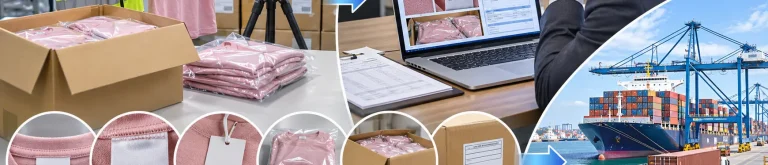
Hand sanitizers are widely used in homes, workplaces, healthcare facilities, and public environments. However, inconsistent formulations, incorrect labeling, leaking bottles, and inadequate quality controls can create safety concerns and costly problems for importers.
For buyers sourcing hand sanitizers from China, a structured inspection process helps verify product appearance, packaging, quantity, and supporting documentation before shipment.
This guide outlines seven essential hand sanitizer inspection checkpoints and explains which requirements need specialized laboratory testing.
1. Identify the Product Type and Intended Market
Hand sanitizers are generally classified according to their active ingredients and intended use.
Common categories include alcohol-based sanitizers containing ethanol or isopropyl alcohol and non-alcohol-based formulations containing other permitted active ingredients.
Product classification is important because regulatory requirements vary by destination market.
For example, hand sanitizers marketed with antiseptic claims in the United States are regulated by the Food and Drug Administration (FDA) as over-the-counter drugs.
Buyers should confirm the product formulation, intended claims, destination market, and applicable regulatory requirements before production.
2. Verify Active Ingredients and Alcohol Concentration
Alcohol concentration is an important quality characteristic of alcohol-based hand sanitizers.
The CDC recommends using products containing at least 60% alcohol when soap and water are unavailable.
However, buyers should not assume that every formulation containing 60% alcohol automatically meets applicable regulatory requirements.
Inspection documentation should identify:
- Declared active ingredients
- Specified alcohol concentration
- Approved formulation and batch number
- Available certificates of analysis
- Relevant laboratory test reports
Accurate alcohol concentration and chemical composition testing require validated laboratory methods.
A routine factory inspection cannot reliably determine whether the formulation meets all chemical and safety requirements.
3. Check Appearance and Physical Characteristics
During product inspection in China, inspectors can examine sampled products for visible manufacturing defects and consistency with approved specifications.
Typical checkpoints include:
- Product color and transparency
- Unexpected particles or visible contamination
- Separation or abnormal sedimentation
- Consistency of gel or liquid appearance
- Unusual odor compared with approved samples
- Incorrect product type or packaging configuration
Physical appearance should remain consistent with the approved reference sample.
However, visual inspection cannot confirm antimicrobial effectiveness, chemical purity, or microbiological safety.
These characteristics require appropriate testing and supporting evidence.
4. Inspect Bottles, Pumps, and Sealing Performance
Packaging defects are common problems in liquid and gel products.
Inspectors should examine bottles, caps, pumps, and dispensing mechanisms for cracks, deformation, poor assembly, or visible leakage.
Where applicable, functional checks may include:
- Pump dispensing operation
- Cap opening and closing
- Bottle and cap compatibility
- Leakage under agreed test conditions
- Net content or fill-volume verification
- Tamper-evident seal condition
Packaging materials should be suitable for the product formulation.
For alcohol-based products, buyers should also consider flammability, material compatibility, and transportation requirements.
5. Review Labels and Regulatory Information
Incorrect labeling can create compliance problems even when the product appears acceptable.
A pre-shipment inspection can compare printed labels against approved artwork and agreed product specifications.
Depending on the destination market, important information may include:
- Product name and intended use
- Active ingredients and declared concentration
- Net contents
- Manufacturer or distributor identification
- Batch or lot identification
- Expiration date where required
- Safety warnings and usage instructions
Alcohol-based products may require appropriate flammability warnings.
Buyers should arrange qualified regulatory review to confirm that labeling and product claims meet the applicable legal requirements.
6. Review Laboratory Testing and Batch Documentation
Hand sanitizer quality cannot be established through visual inspection alone.
Depending on the formulation and destination market, laboratory testing may be necessary to verify:
- Alcohol concentration and active ingredient identity
- Methanol and other relevant impurities
- Microbiological quality
- Product stability and shelf life
- Antimicrobial effectiveness
- Packaging compatibility
Inspectors can review available certificates, batch records, and test reports for consistency with the purchase order and product identification.
However, reviewing documents does not independently establish their authenticity or confirm that the product meets all regulatory requirements.
Buyers should use qualified laboratories and appropriate regulatory specialists when technical verification is required.
7. Verify Carton Packaging and Shipment Readiness
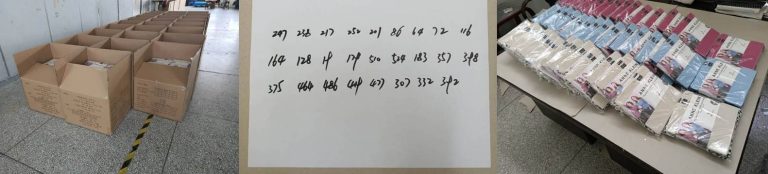
Before shipment, finished products should be checked for correct quantities, carton condition, labeling, and packaging protection.
Inspectors should verify:
- Quantity per carton and total shipment quantity
- Correct product models and packaging versions
- Carton sealing and internal protection
- Shipping marks and batch identification
- Visible leakage or damaged retail packaging
- Storage conditions where specified
For routine workmanship and packaging inspection, buyers may use ISO 2859-1 or ANSI/ASQ Z1.4 sampling procedures.
However, sampling inspection cannot replace required chemical testing, product release controls, or dangerous goods transportation compliance.
A structured quality control in China process should combine factory inspections with appropriate laboratory verification and documentation review.
Conclusion
Effective hand sanitizer inspection requires attention to product identification, physical appearance, packaging integrity, labeling, batch documentation, and shipment condition.
Chemical composition, antimicrobial effectiveness, and regulatory compliance must be verified through appropriate technical procedures rather than visual inspection alone.
NBNQC provides independent inspection services across China, helping international buyers assess packaging, workmanship, quantities, labeling, and other agreed requirements before shipment.