Glass containers are widely used for food, beverages, cosmetics, pharmaceuticals, and household products. Although glass offers excellent transparency, chemical resistance, and recyclability, manufacturing defects can affect appearance, functionality, and product safety.
For international buyers sourcing glass bottles, jars, and other containers from China, a structured inspection process helps identify defects before shipment and reduce the risk of breakage, leakage, and customer complaints.
The following seven checkpoints provide a practical approach to glass container inspection, covering workmanship, dimensions, structural integrity, and packaging.
1. Check Appearance and Visible Defects
Visual inspection is the first step in evaluating finished glass containers.
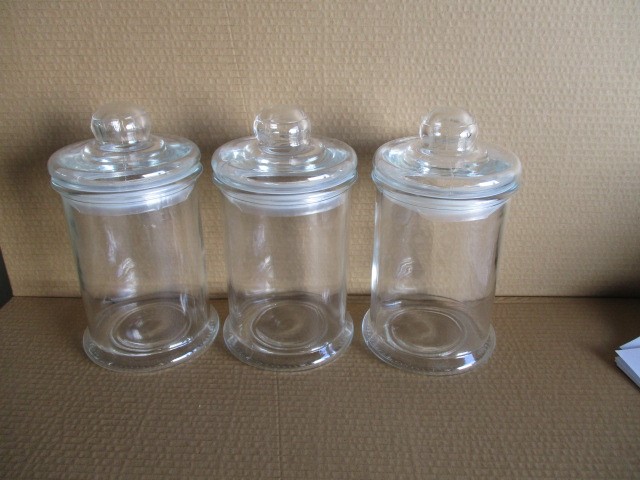
Inspectors should examine the body, neck, base, and rim under suitable lighting conditions.
Common defects include:
- Cracks, chips, and sharp edges
- Scratches and scuff marks
- Air bubbles and foreign inclusions
- Uneven color or transparency
- Deformation and irregular shapes
- Surface contamination and finishing defects
Not every visible bubble or scratch has the same severity. Defect classification should consider its location, size, appearance, and potential effect on product performance.
Cracks, sharp edges, and defects that may compromise container integrity require particular attention.
2. Verify Dimensions and Capacity
Glass containers must meet approved dimensional specifications to ensure compatibility with closures, filling equipment, and packaging.
During product inspection in China, inspectors can measure important characteristics using suitable instruments.
Typical measurements include:
- Overall height and body diameter
- Neck finish and opening dimensions
- Wall and base thickness where accessible
- Empty container weight
- Internal capacity or brimful capacity
Dimensions should be compared against approved drawings and agreed tolerances.
For bottles with screw caps or specialized closures, neck dimensions are particularly important because small deviations can affect sealing performance.
Capacity measurements should follow an agreed procedure, including defined temperature and filling conditions where relevant.
3. Examine Glass Thickness and Structural Integrity
Uniform appearance does not necessarily guarantee sufficient mechanical strength.
Glass thickness distribution, manufacturing stresses, surface damage, and container design can influence resistance to breakage.
Inspectors should check for visibly thin areas, irregular wall distribution, and defects around the base, shoulder, and neck.
Depending on the container type, additional tests may include:
- Wall thickness measurement
- Internal pressure resistance testing
- Thermal shock resistance testing
- Impact resistance testing
- Residual stress evaluation
These tests require appropriate equipment and defined acceptance criteria.
Routine visual inspection cannot replace specialized testing when structural performance is a critical requirement.
4. Inspect Neck Finishes and Closure Compatibility
A glass container may appear acceptable but still fail during filling, sealing, or transportation.
The neck finish should be checked for chips, deformation, uneven sealing surfaces, and dimensional inconsistencies.
For containers supplied with caps, lids, or other closures, inspectors should verify compatibility with the approved components.
Where applicable, basic functional checks may include:
- Cap fitting and removal
- Closure alignment
- Thread engagement
- Leakage under specified test conditions
- Visible damage after closure application
Leakage testing should follow an agreed method suitable for the container and closure design.
For pressure-sensitive or specialized packaging, laboratory testing may be necessary.
5. Verify Decoration, Printing, and Labeling
Many glass containers feature printed logos, colored coatings, frosting, or decorative finishes.
Inspectors should compare finished products against approved samples and artwork specifications.
Important checkpoints include print position, color consistency, adhesion, coating uniformity, and resistance to normal handling.
Common defects include misaligned printing, missing artwork, peeling coatings, scratches, and uneven decoration.
For food-contact or cosmetic packaging, buyers should also verify applicable material and coating compliance documentation.
Visual checks alone cannot establish chemical safety or regulatory compliance.
6. Evaluate Packaging and Transportation Protection
Glass containers are fragile and require appropriate packaging to prevent damage during handling and transportation.
A pre-shipment inspection should verify that packaging matches approved requirements.
Inspectors may check:
- Carton strength and condition
- Internal dividers and protective materials
- Quantity per carton
- Product arrangement and separation
- Shipping marks and handling labels
- Pallet condition and carton stacking
Where specified, packaging performance tests may be arranged to evaluate resistance to transportation hazards.
Even well-manufactured glass containers can arrive damaged if packaging protection is inadequate.
7. Apply Appropriate Sampling and Acceptance Criteria
Inspection requirements should reflect the container’s intended use, product value, and potential safety risks.
For general workmanship inspection, buyers may use ISO 2859-1 or ANSI/ASQ Z1.4 sampling plans.
A commonly used inspection arrangement is General Inspection Level II with AQL limits of Critical 0, Major 2.5, and Minor 4.0.
However, critical defects such as dangerous sharp edges or structural cracks may require stricter controls and additional investigation.
A well-defined glassware quality control checklist should identify inspection methods, acceptance criteria, and required tests before production begins.
Sampling inspection helps evaluate batch quality but cannot guarantee that every individual container is defect-free.
Conclusion
Effective glass container inspection involves more than checking appearance. Dimensions, thickness, closure compatibility, decoration, packaging, and appropriate testing all contribute to reliable product quality.
By establishing clear specifications and conducting inspections before shipment, buyers can identify manufacturing problems and make informed acceptance decisions.
NBNQC provides independent inspection services across China, helping international buyers verify glass container workmanship, dimensions, packaging, and other agreed quality requirements before shipment.