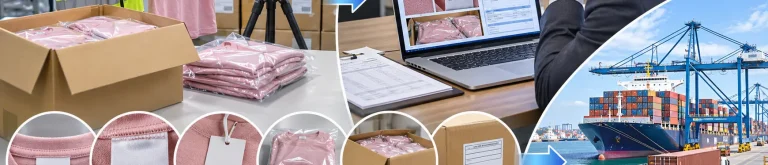
A supplier may describe its products as recycled, biodegradable, sustainably sourced, or environmentally friendly. These claims can influence purchasing decisions, particularly when international brands have specific requirements for materials, packaging, and product labeling.
However, a green label or supplier declaration does not necessarily prove that the finished goods meet the buyer’s expectations. Material substitutions, inconsistent packaging, and incomplete documentation can create discrepancies between what was ordered and what was manufactured.
For importers, integrating environmental requirements into product inspection in China provides an additional opportunity to identify such inconsistencies before shipment.

When Environmental Claims Become Quality Requirements
Environmental characteristics are often treated as marketing features, but they can also be contractual product specifications.
Consider a retailer ordering shopping bags manufactured with 80% recycled polyester. If the supplier uses conventional polyester without authorization, the finished bags may still look identical to the approved samples.
A conventional visual inspection might not detect this difference.
The buyer should therefore define the required recycled content, acceptable supporting documents, labeling instructions, and any necessary laboratory testing before production begins.
The same principle applies to FSC-certified paper packaging, bamboo products, compostable materials, and other goods marketed with environmental claims.
Without measurable requirements, it becomes difficult to determine whether the supplier has fulfilled its obligations.
Checking Recycled and Renewable Materials
Many manufacturers offer products containing recycled plastics, textiles, paper, or plant-based materials.
During inspection, an inspector may compare available material labels, supplier declarations, purchase records, and relevant certificates against the buyer’s specifications.
For example, when inspecting products advertised as containing recycled polyester, the inspector can check whether the factory provides supporting documentation and whether material identification is consistent with the approved requirements.
However, documentation review and visual examination cannot independently establish the actual recycled percentage.
Where independent verification is required, buyers may need appropriate chain-of-custody certification, traceability records, or specialized testing, depending on the material and claim.
This distinction is important because a product can appear acceptable while its environmental claims remain insufficiently supported.
Eco-Friendly Packaging Must Still Protect Products
Reducing packaging materials can help buyers pursue waste-reduction objectives, but excessive reductions may compromise product protection.
Replacing plastic inserts with molded paper cushioning, for example, may change how a product responds to impact during transportation.
Inspectors can compare the finished packaging with approved samples and evaluate observable characteristics such as:
- Carton dimensions, construction, and workmanship
- Protective inserts and cushioning arrangements
- Packaging materials and printed identification
- Product movement inside the retail packaging
- Shipping marks and recycling-related labels
- Packaging condition after agreed on-site tests
Where required, suitable drop or transportation tests can be arranged according to the agreed inspection procedure and available equipment.
The objective is to confirm that packaging changes have been implemented correctly without overlooking practical transportation risks.
Reviewing Environmental Labels and Claims
Environmental labeling deserves particular attention because inaccurate claims may create commercial and regulatory problems.
Terms such as “100% recycled,” “biodegradable,” “compostable,” and “plastic-free” have different meanings and may require different supporting evidence.
During a pre-shipment inspection, inspectors can verify whether printed labels, product descriptions, packaging artwork, and environmental symbols match the approved specifications.
They may also record discrepancies between supplier documents and finished product markings.
However, inspectors cannot confirm that a product is biodegradable or legally compliant simply by examining its packaging.
Buyers remain responsible for determining applicable market requirements and obtaining appropriate supporting evidence before making environmental claims.
Using Factory Assessments to Understand Supplier Practices
Product-level verification addresses only part of the environmental picture.
A supplier may manufacture products using approved materials while having weaknesses in waste handling, material segregation, or production documentation.
When environmental practices are important to a sourcing decision, buyers may request additional checks as part of a factory audit in China.
Depending on the agreed scope, these checks may include observing waste storage areas, reviewing available environmental records, examining material identification procedures, and checking relevant permits or management documents.
Such observations can help identify potential risks, but they do not replace a dedicated environmental compliance audit or formal certification.
Making Environmental Requirements Easier to Verify
The most practical approach is to establish clear requirements before placing an order.
Buyers should specify acceptable materials, required supporting documents, approved packaging designs, labeling instructions, and any applicable testing requirements.
They should also communicate which environmental characteristics are critical to order acceptance.
For example, a supplier should understand whether a recycled-content declaration is sufficient for the buyer’s purposes or whether independent certification is mandatory.
Clear requirements allow inspectors to report objective findings rather than relying on broad descriptions such as “eco-friendly.”
How NBNQC Can Support Buyers
NBNQC provides independent product inspection and manufacturing audit services across mainland China.
For buyers sourcing products with environmental requirements, relevant checkpoints can be incorporated into the agreed inspection scope, including material identification, packaging verification, labeling checks, and supporting document reviews.
Our reports document observable conditions and identified discrepancies, helping importers communicate with suppliers and make informed shipment decisions.
Environmental responsibility requires credible evidence, not simply attractive product claims.
By combining clear purchasing specifications with independent inspection and appropriate third-party verification, buyers can reduce the risk of receiving products that do not match their environmental commitments.