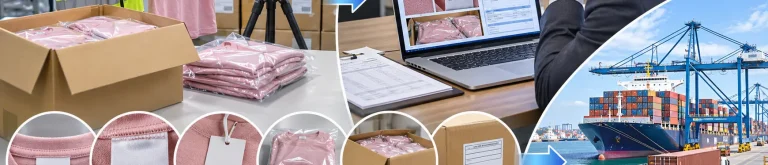
During mass production, product quality can change as different workers, materials, equipment, and production batches move through the manufacturing process. Even when the initial samples are approved, problems may emerge during large-scale production. If these issues remain undetected, they can affect a significant portion of the order and become expensive to correct.
A well-coordinated During Production Inspection (DPI) helps buyers monitor manufacturing quality while production is still underway. More importantly, it provides an opportunity to communicate directly with the factory, identify the causes of problems, and verify corrective actions before the order is completed.
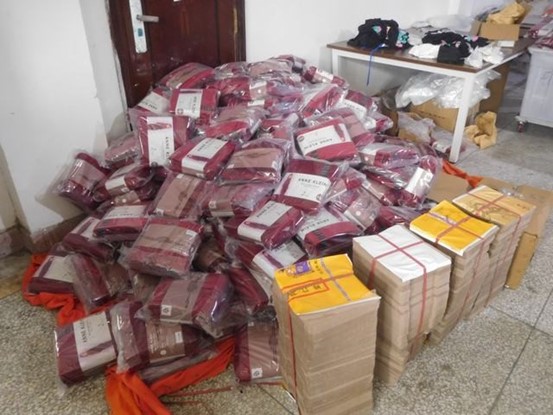
1. Prepare Inspection Requirements Before the Factory Visit
Effective inspection begins with clear requirements. Before arranging an inspection, buyers should provide the documents and reference materials needed to evaluate the products objectively.
These may include:
- Purchase orders and product specifications.
- Approved samples or reference photographs.
- Technical drawings and measurement charts.
- Material and component requirements.
- Packaging and labeling instructions.
- Inspection checklists and specific testing requirements.
For products with multiple styles, colors, or sizes, buyers should identify the critical differences that inspectors need to verify.
Clear documentation reduces misunderstandings between the buyer, inspector, and factory. It also helps ensure that inspection findings are based on agreed requirements rather than subjective judgments.
2. Coordinate the Inspection with Actual Production Progress
Timing is important when arranging a DPI. If the inspection takes place too early, there may not be enough finished products to provide a meaningful assessment. If it takes place too late, the factory may have insufficient time to correct problems.
As a general guideline, DPI is most useful when approximately 20%–80% of the order has been produced.
Before confirming the inspection date, buyers should ask the supplier to provide:
- Current production completion percentage.
- Quantity of finished and semi-finished products.
- Production schedule for the remaining order.
- Availability of different styles, colors, and sizes.
- Expected completion date and packing schedule.
The inspection should ideally be arranged when representative products are available and sufficient production time remains for corrective action.
For orders involving several production lines or multiple styles, buyers should also identify whether the available products represent the overall production rather than a single completed section.
3. Check Both Finished and Semi-Finished Products
One important advantage of DPI is the opportunity to examine products at different manufacturing stages.
Inspecting finished goods helps evaluate workmanship, dimensions, appearance, functionality, labeling, and packaging. Semi-finished products can provide additional information about manufacturing processes and potential defects that may affect later production.
Depending on the product category, inspectors may check:
Materials and Components: Verify whether the materials, accessories, and components match the approved specifications.
Workmanship: Examine stitching, assembly, finishing, surface treatment, and other product-specific characteristics.
Dimensions and Weight: Compare actual measurements with approved drawings, samples, or measurement charts.
Functionality: Perform applicable operating, assembly, durability, or other on-site checks.
Labels and Packaging: Verify artwork, product information, barcodes, shipping marks, and packaging requirements.
Production Progress: Compare actual finished quantities with the supplier’s production schedule.
For random sampling, inspectors can follow ANSI/ASQ Z1.4 (ISO 2859-1), using the agreed inspection level and AQL criteria where applicable.
4. Communicate Inspection Findings Clearly to the Factory
Identifying defects is only the first step. The factory must understand what is wrong, where the problems occur, and what corrective actions are expected.
Inspection reports should include clear photographs, defect descriptions, affected product details, and relevant measurements or test results.
Buyers should pay particular attention to recurring problems. For example, inconsistent garment measurements across several production batches may indicate an issue with cutting patterns or sewing procedures. Repeated assembly defects may suggest inadequate operator training or insufficient process controls.
Rather than simply requesting the factory to improve quality, buyers should communicate specific findings and agree on practical corrective actions.
For significant issues, the supplier should identify the root cause, assign responsibility, and establish a deadline for correction.
5. Verify Corrective Actions Before Production Continues
After receiving inspection feedback, the factory should implement corrective measures as soon as possible.
Depending on the findings, actions may include:
- Adjusting production equipment or manufacturing settings.
- Replacing defective materials or components.
- Revising production procedures.
- Retraining workers on specific operations.
- Reworking affected products.
- Improving in-process quality checks.
For serious or recurring defects, buyers should request supporting photographs, updated samples, or an additional on-site verification.
It is important not to assume that correcting a small number of inspected samples automatically resolves the problem throughout the production line. The underlying cause must be addressed to prevent the same defect from appearing in subsequent batches.
6. Follow Up Before the Final Shipment Inspection
DPI should be part of an ongoing quality management process rather than an isolated factory visit.
After the inspection, buyers should review the report, confirm corrective action progress, and monitor whether production quality remains consistent.
If significant problems were discovered, an additional DPI may be necessary before the order reaches completion.
Once at least 80% of the order is finished, a pre-shipment inspection can provide a final assessment of the finished goods before shipment. For orders with serious quality concerns or particularly strict acceptance requirements, buyers may also consider a 100% inspection.
Combining appropriate inspection stages helps identify problems earlier while maintaining control over the final shipment.
Conclusion
A successful During Production Inspection depends on more than checking product samples. Proper preparation, accurate production information, clear communication, and effective corrective action are all essential to achieving consistent manufacturing quality.
By coordinating inspections with factory production schedules and following up on identified problems, importers can reduce the risk of large-scale defects, minimize rework, and improve supplier accountability.
NBNQC provides independent third-party inspection services in China, helping international buyers monitor manufacturing quality through Initial Production Check, During Production Inspection, Pre-Shipment Inspection, and Full Inspection. Our inspectors provide clear findings and photographic reports to support timely decisions throughout the production process.