Crossflow fans, also known as tangential fans, are widely used in air conditioners, air curtains, heating equipment, and household appliances. Their cylindrical impellers generate airflow across a relatively wide outlet, making them suitable for applications requiring compact installation and distributed air movement.
However, manufacturing defects can cause excessive noise, vibration, reduced airflow, or premature motor failure. For buyers sourcing crossflow fans from China, systematic quality inspection helps identify these problems before shipment.
The following seven checks cover essential quality requirements for crossflow and tangential fans.
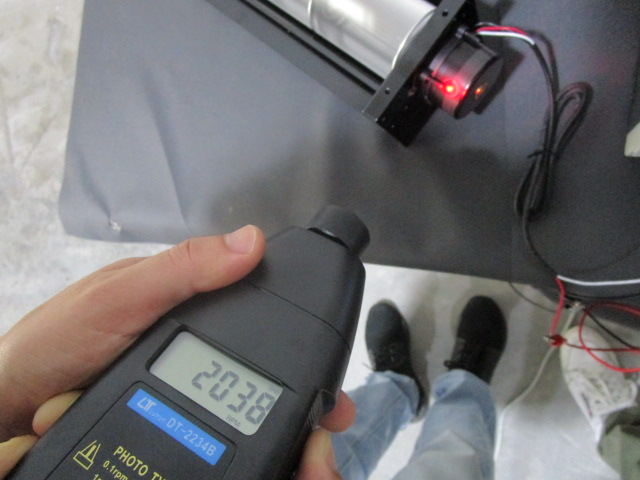
1. Verify Materials and Product Specifications
Inspection should begin by confirming that the finished fan matches the approved technical specifications.
Important characteristics include:
- Overall dimensions and mounting positions
- Impeller diameter and length
- Blade quantity and configuration
- Motor type, voltage, and rated power
- Housing materials and surface finish
- Electrical connectors and wiring
Inspectors should compare production samples with approved drawings, specifications, and reference samples.
During crossflow fan quality inspection, material substitutions, incorrect dimensions, or incompatible components should be recorded as non-conformities.
2. Inspect Impeller Blades and Assembly
The cylindrical impeller is one of the most critical components of a crossflow fan.
Blade deformation, poor assembly, or inconsistent spacing can affect airflow and increase operating noise.
Inspectors should examine:
- Bent, cracked, or damaged blades
- Uneven blade spacing
- Loose impeller connections
- Excessive axial or radial runout
- Poorly secured end plates
- Contact between the impeller and housing
The impeller should rotate freely without rubbing against surrounding components.
Dimensional measurements and runout checks should follow the buyer’s specified tolerances.
3. Evaluate Vibration and Rotational Balance
Crossflow fans have relatively long rotating assemblies, making balance and shaft alignment important for stable operation.
Excessive vibration may result from uneven blade weight, shaft deformation, incorrect assembly, or worn bearings.
Inspectors should observe the fan during operation and check for abnormal movement or mechanical noise.
Where specified, vibration measurements should be performed using suitable instruments and agreed operating conditions.
Dynamic balancing records may also be reviewed when required by the buyer.
A simple operational check can reveal obvious vibration problems but cannot replace formal balancing verification.
4. Check Noise and Operating Performance
Low operating noise is an important requirement for fans used in residential and commercial equipment.
Common noise problems include:
- Bearing noise
- Blade contact with the housing
- Mechanical rattling
- Motor humming
- Excessive airflow turbulence
During fan performance inspection, inspectors should operate selected units under defined voltage and installation conditions.
Noise measurements should specify the measuring distance, background noise, operating speed, and applicable test method.
Buyers should establish acceptable noise limits in advance rather than relying only on subjective judgments.
Formal acoustic testing may require controlled laboratory conditions.
5. Verify Airflow and Electrical Performance
Airflow performance is essential for evaluating whether a crossflow fan meets its intended application requirements.
Depending on the product specifications, relevant parameters may include airflow volume, static pressure, rotational speed, input power, and operating current.
Inspectors should verify:
- Correct rotation direction
- Stable startup and operation
- Rated voltage compatibility
- Operating current and power consumption
- Airflow performance where test equipment is available
- Consistent operation at specified speeds
Airflow and pressure testing should follow an agreed method and appropriate test arrangement.
Routine factory inspections may include basic functional checks, while accurate aerodynamic performance measurements generally require specialized equipment.
6. Review Electrical Safety and Applicable Standards
Electrical safety requirements depend on the fan’s intended application, installation method, and destination market.
Relevant standards may include:
- IEC 60034-1: Rating and performance requirements for applicable rotating electrical machines.
- ISO 5801: Aerodynamic performance testing for fans within its defined scope.
- IEC 60335-1: General safety requirements for household and similar electrical appliances, where applicable.
- Applicable IEC 60335-2 standards: Particular safety requirements for relevant appliance categories.
Inspectors should verify available electrical safety documentation and conduct agreed on-site checks.
These may include protective earthing continuity, insulation resistance, or dielectric strength testing when required and when suitable equipment and qualified personnel are available.
Routine product inspection does not replace laboratory certification or complete regulatory conformity assessment.
7. Inspect Packaging and Shipment Readiness
Crossflow fans may be damaged during transportation because of their long impellers, delicate blades, and exposed electrical connections.
Before shipment, inspectors should check:
- Adequate protection for impellers and motors
- Secure positioning inside individual packaging
- Protection of cables and connectors
- Correct product labels and specifications
- Carton quantities and shipping marks
- Packaging condition and accessory completeness
During pre-shipment inspection, inspectors should also verify that finished products and packaging match the purchase order.
Sampling may follow ISO 2859-1 or ANSI/ASQ Z1.4 using the agreed inspection level and AQL values.
Conclusion
Effective crossflow fan inspection requires careful evaluation of impeller construction, rotational balance, vibration, noise, airflow, electrical performance, and packaging protection.
Buyers should establish clear technical specifications, measurable acceptance criteria, and appropriate testing procedures before production begins.
NBNQC provides independent inspection services across mainland China, helping international buyers evaluate crossflow and tangential fans against approved requirements and identify manufacturing defects before shipment.