Purchasing a CNC machining center from China involves a significant investment. Beyond the purchase price, buyers must consider machining accuracy, operational reliability, machine configuration, safety, and after-sales support. Discovering major problems after overseas delivery can result in expensive repairs, production delays, and disputes with suppliers.
A Factory Acceptance Test (FAT) allows buyers to evaluate a machining center at the manufacturer’s facility before shipment. When combined with independent quality control in China, this process helps verify agreed specifications and identify potential problems while the equipment remains accessible.
1. Verify Machine Specifications and Configuration
Before testing begins, confirm that the completed machining center matches the purchase order and approved technical specifications.
Important checkpoints include:
- Machine model and serial number
- X, Y, and Z axis travel
- Spindle power and maximum speed
- CNC controller brand and model
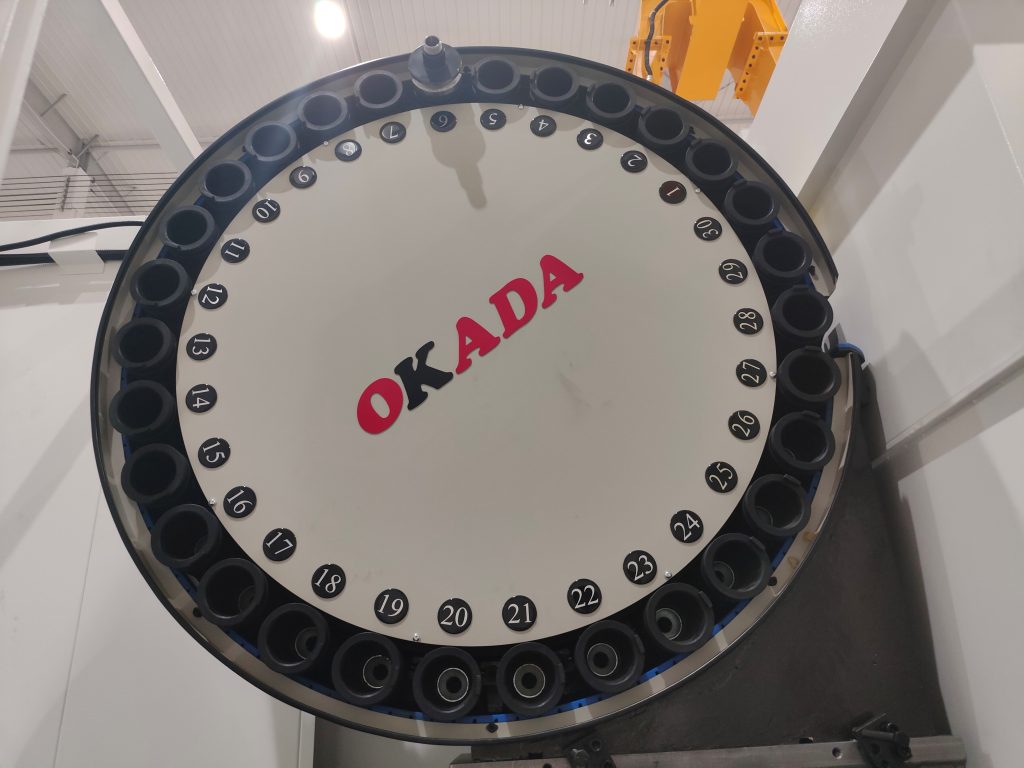
- Tool magazine capacity
- Table dimensions and load capacity
- Installed accessories and optional equipment
Inspectors should also verify whether the machine includes the agreed components, such as chip conveyors, coolant systems, tool probes, or automatic lubrication devices.
Any substitutions should be documented and approved by the buyer.
2. Check Machine Structure and Workmanship
Visual inspection helps identify assembly problems, transportation damage, and manufacturing defects.
Inspectors should examine the machine frame, enclosure, worktable, guideways, protective covers, and accessible mechanical components.
Typical checks include surface damage, loose fasteners, oil leakage, damaged cables, incomplete assembly, and poor finishing.
The machine should be installed on a suitable foundation and properly leveled before precision testing.
Visual inspection cannot independently confirm structural rigidity or long-term durability, but it can reveal obvious problems requiring further investigation.
3. Evaluate Axis Movement and Positioning Accuracy
Positioning accuracy and repeatability directly affect machining performance.
During FAT, buyers may request verification of axis positioning, backlash, and repeatability using suitable measuring instruments.
ISO 230-2 provides methods for determining the accuracy and repeatability of positioning of numerically controlled machine tool axes.
Depending on the agreed test scope, measurements may involve laser interferometers, dial indicators, or other calibrated instruments.
Test conditions, machine warm-up, environmental temperature, and measurement procedures should be documented.
A basic movement check confirms axis operation but does not establish precision compliance without appropriate measurements.
4. Test Spindle and Automatic Tool Changer
The spindle and automatic tool changer are critical to machining efficiency and reliability.
A structured industrial equipment inspection should include relevant operational checks where the factory provides suitable testing conditions.
Spindle checks may cover:
- Start and stop operation
- Speed adjustment
- Abnormal noise or vibration
- Temperature behavior during operation
- Runout measurement where specified
The automatic tool changer should be tested for correct tool selection, positioning, clamping, and repeated tool changes.
Any abnormal operation, excessive vibration, or tool-changing failure should be recorded and investigated.
5. Conduct a Trial Machining Test
A trial machining test provides practical evidence of the machine’s cutting performance.
The supplier can manufacture a test workpiece using an agreed CNC program, cutting tools, material, and machining parameters.
After machining, the workpiece should be measured against the approved drawing.
Depending on the application, checks may include:
- Hole diameter and position
- Flatness and perpendicularity
- Dimensional accuracy
- Surface roughness
- Circularity and geometric tolerances
ISO 10791 includes relevant test conditions for machining centers, including accuracy and machining performance tests.
However, a successful trial part does not guarantee that every future production condition will produce identical results.
6. Verify CNC Controls and Safety Functions
CNC control systems should operate according to the approved machine configuration.
Inspectors can check the controller interface, axis commands, program execution, alarms, and available operating modes.
Safety-related checks should include emergency stop functions, protective doors, interlocks, warning indicators, and accessible electrical components.
Testing must follow safe procedures and the manufacturer’s instructions.
Applicable machinery safety requirements depend on the machine configuration and destination market.
Routine FAT checks do not replace formal safety certification or a complete regulatory conformity assessment.
7. Review Documentation and Shipment Preparation
Before shipment approval, buyers should confirm that the supplier provides the required technical documentation and accessories.
Typical documents include:
- Operation and maintenance manuals
- Electrical and pneumatic diagrams
- Machine accuracy test records
- Equipment and component identification
- Warranty and spare parts information
- Available conformity documentation
A pre-shipment inspection can also verify machine identification, accessory quantities, visible condition, and export packaging.
For large machinery, buyers should pay particular attention to corrosion protection, equipment securing, moisture protection, and handling instructions.
Conclusion
A well-planned Factory Acceptance Test helps buyers verify CNC machining center specifications, operational functions, positioning accuracy, and machining performance before overseas delivery.
The most effective approach combines agreed acceptance criteria, suitable testing equipment, documented results, and independent verification.
NBNQC provides third-party inspection services for industrial equipment across China, helping international buyers verify machine configurations, workmanship, operational checks, documentation, and other agreed requirements before shipment.