Material quality has a direct impact on the appearance, durability, functionality, and perceived value of bags. Even when workmanship is acceptable, incorrect fabrics, leather, lining, hardware, or accessories can still lead to customer complaints after shipment.
For importers and brands, material verification should therefore be an important part of a Pre-Shipment Inspection. By comparing finished products with approved samples, specifications, material swatches, and other buyer-provided references, inspectors can identify material substitutions and inconsistencies before goods leave the factory.
Why Material Verification Matters for Bags
Bags often combine multiple materials in one product. Depending on the design, these may include genuine leather, PU, nylon, polyester, canvas, lining fabric, foam, webbing, zippers, buckles, metal fittings, coatings, and decorative components.
A replacement material may look similar to the approved version but differ in thickness, texture, strength, color, or performance. This is why material verification is a key part of effective quality control for bags and fashion accessories.
It is particularly important for branded handbags, backpacks, luggage, travel bags, and products using customized fabrics or hardware.
Review Approved Specifications and Samples
Before inspection, the inspector should review all available references provided by the buyer, such as:
- Approved or sealed samples
- Product specifications or tech packs
- Bill of Materials (BOM)
- Material and color swatches
- Pantone references
- Purchase orders
- Artwork and logo requirements
- Packaging instructions
The finished products should then be compared against these references.
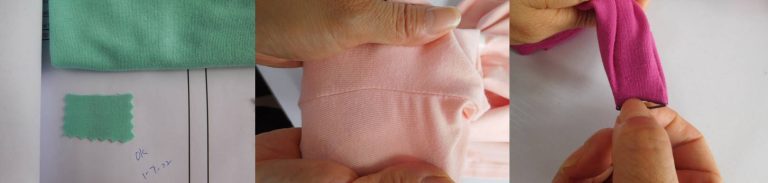
An approved sample is especially useful for checking material appearance, texture, color, hardware finish, construction, and overall feel. If a factory has substituted a material or component, the difference should be identified and clearly recorded where possible.
Check Main Fabric and Exterior Materials
The exterior material is one of the most visible parts of a bag and should be checked carefully.
For leather, PU, nylon, polyester, canvas, or other fabrics, inspectors may verify:
- Material type and appearance
- Color and shade
- Texture and surface finish
- Thickness where specified
- Fabric weight where applicable
- Coating quality
- Pattern consistency
- Scratches, stains, peeling, or other damage
Samples should also be compared with each other to identify variation between production batches.
Differences in color, gloss, grain, or texture may be noticeable to the buyer even when the factory considers the materials technically equivalent.
Verify Lining and Internal Materials
Interior materials should not be overlooked during bag inspection.
Inspectors should verify lining fabrics, reinforcement materials, foam, padding, pocket materials, and internal panels against the approved specification.
Typical problems include incorrect lining colors, thinner materials, poor-quality foam, stains, loose coating, or substitutions that are not immediately visible from the outside.
Where possible, accessible internal materials should be compared directly with the approved sample.
Check Zippers, Buckles and Hardware
Hardware can significantly affect both the appearance and functionality of a bag.
Zippers, sliders, buckles, hooks, rivets, magnetic snaps, rings, locks, and other fittings should be checked for the correct:
- Type
- Size
- Color
- Finish
- Logo or branding
- Position
- Functionality
Inspectors should also look for corrosion, scratches, sharp edges, loose installation, discoloration, or inconsistent plating.
Zippers and closures may be operated repeatedly to identify obvious problems such as jamming, poor alignment, or weak installation.
Verify Straps, Handles and Webbing
Handles and straps are important because they are exposed to repeated loading during normal use.
Inspectors should check their material, width, thickness, color, stitching, reinforcement, and attachment against the approved specification.
Basic pull or load tests may also be performed when required by the buyer. Stress points around handles, shoulder straps, buckles, and reinforcement patches deserve particular attention because weaknesses in these areas may cause premature failure.
Check Material Consistency
Material verification should not focus only on whether the general material type is correct.
Inspectors should also check consistency across sampled products for:
- Color and shade
- Surface texture
- Material thickness
- Coating
- Hardware finish
- Lining
- Webbing
- Decorative components
Visible differences may indicate mixed material batches or uncontrolled substitutions.
Any significant discrepancy should be photographed and clearly described in the inspection report.
On-Site Tests and Material Performance
Depending on the product and buyer requirements, material-related checks may include colorfastness checks, fabric weight measurement, water-resistance checks, load tests, pull tests, zipper operation, adhesion checks, or odor checks.
These tests should follow the buyer’s specifications and the agreed inspection procedure whenever possible.
More specialized properties, such as detailed chemical composition, tensile strength, or restricted substance content, may require laboratory testing rather than normal on-site inspection.
Chemical Compliance and Documentation
Where material compliance is important, inspectors may review available supplier declarations, certificates, or laboratory reports.
For example, buyers may require documentation relating to restricted substances, recycled material claims, or other market-specific requirements.
A Pre-Shipment Inspection can verify whether required documents are available and whether finished products correspond with the approved specifications, but it does not replace laboratory analysis when chemical composition must be independently verified.
Reporting Material Non-Conformities
Material discrepancies should be clearly documented in the inspection report.
Useful evidence may include photos, measurements, comparisons with approved samples, affected sample quantities, and descriptions of the observed differences.
Typical findings include incorrect material, color variation, PU peeling, mismatched lining, substituted hardware, inconsistent plating, incorrect webbing, damaged surfaces, or weak strap materials.
Clear reporting allows the buyer to determine whether the deviation is acceptable or whether corrective action is required before shipment.
Conclusion
Bag material verification is an important part of quality inspection before shipment. Checking fabrics, leather, linings, hardware, straps, coatings, and accessories against approved references helps identify substitutions and inconsistencies before products leave the factory.
Combining clear specifications, approved samples, practical on-site checks, and appropriate laboratory testing where necessary gives buyers better control over finished product quality.
For completed orders, a Pre-Shipment Inspection provides an effective final checkpoint for verifying material conformity, workmanship, functionality, packaging, and other buyer requirements before shipment.