A toy can have attractive packaging, correct dimensions, and excellent workmanship while still containing a hazardous substance that cannot be detected by ordinary inspection.
Asbestos contamination illustrates this problem. Although asbestos is widely restricted because of its serious health risks, naturally occurring mineral materials can introduce contamination into certain consumer products.
For importers sourcing children’s products, understanding the difference between toy quality inspection and specialized material testing is essential. Both contribute to product safety, but they serve different purposes.

Why Asbestos Contamination Matters
Asbestos refers to a group of naturally occurring fibrous minerals. When asbestos-containing materials release airborne fibers, inhalation can increase the risk of serious diseases, including mesothelioma and lung cancer.
The health consequences may develop many years after exposure.
Children’s products require particular attention because they may be handled frequently, disturbed during play, or used in ways that release dust.
However, the presence of asbestos cannot be established simply by examining a product’s appearance, texture, or smell.
A toy that looks completely normal may still require material verification if its ingredients or supply chain present a credible contamination risk.
Which Toy Materials Deserve Closer Attention?
Not every toy presents the same asbestos risk.
Mineral-based materials deserve particular consideration, especially when their geological origin or processing history is uncertain.
Products that may warrant additional assessment include:
- Play sand and decorative sand used in children’s activities
- Sand-containing modeling or sensory products
- Mineral powders and certain talc-containing formulations
- Other products incorporating potentially contaminated mineral fillers
The risk depends on the actual raw materials, their sources, processing methods, and contamination controls.
Importers should avoid assuming that every plastic, wooden, or textile toy requires identical asbestos testing.
A risk-based approach helps direct resources toward materials where contamination is plausible.
Why Visual Inspection Cannot Detect Asbestos
During a routine factory visit, inspectors can examine workmanship, labeling, packaging, dimensions, and product functionality.
They may also review available material specifications, supplier declarations, and relevant laboratory reports.
However, asbestos fibers are not reliably identifiable through ordinary visual examination.
An inspector cannot confirm that sand, powder, or another mineral material is asbestos-free simply by looking at it.
Even when a supplier provides a declaration stating that the material contains no asbestos, the document should be assessed for relevance, traceability, and supporting evidence.
This is an important limitation of product inspection in China when chemical or mineral contamination is involved.
What Laboratory Testing Can Establish
When asbestos contamination is a credible concern, buyers should consult a competent laboratory with appropriate asbestos testing capabilities.
Different analytical methods have different detection limits and suitability for particular materials.
For sand-containing consumer products, the UK’s OPSS has recommended scanning electron microscopy with energy-dispersive X-ray spectroscopy (SEM-EDX) or transmission electron microscopy (TEM) because these techniques can identify very fine fibers and low levels of contamination.
Polarized light microscopy (PLM) may be useful in some circumstances but can be insufficiently sensitive for certain low-level contamination scenarios.
Testing procedures should be selected by qualified specialists according to the product material, relevant regulations, and required analytical sensitivity.
A negative result applies to the tested samples within the limitations of the method. It should not automatically be interpreted as proof that every unit in a shipment is free from asbestos.
Supplier Traceability Is Equally Important
Laboratory testing is only one part of a reliable material assurance process.
Buyers should understand where relevant mineral ingredients originate and whether the factory maintains consistent material purchasing and identification procedures.
Useful supporting records may include raw material specifications, supplier identification, batch numbers, purchase records, and relevant testing documentation.
If a manufacturer changes its material source during production, earlier test results may no longer represent the materials used in subsequent batches.
For higher-risk products, buyers may require additional controls covering supplier changes, batch traceability, and periodic verification.
These measures help address contamination risks before finished goods reach the inspection stage.
Combining Product Inspection with Material Verification
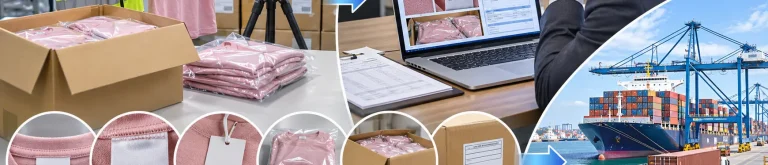
A pre-shipment inspection can help buyers verify that finished toys match approved specifications, packaging requirements, labels, and relevant order details.
Inspectors can also check whether agreed supporting documents are available and identify discrepancies requiring further investigation.
However, ordinary AQL sampling and visual inspection cannot establish the absence of asbestos.
Where specialized testing is necessary, it should be arranged separately through a suitably qualified laboratory.
Importers should also verify the specific regulatory requirements of their destination markets rather than assuming that general toy safety testing automatically covers every potential contaminant.
How NBNQC Supports Toy Importers
NBNQC provides independent toy inspection services across mainland China, helping international buyers assess workmanship, dimensions, functionality, labeling, packaging, and conformity with agreed product specifications.
Where buyers have specific material safety requirements, relevant document checks can be included in the agreed inspection scope.
NBNQC’s routine on-site inspection does not replace specialized asbestos analysis or laboratory certification.
For products involving potential mineral contamination, buyers should arrange appropriate laboratory testing and supplier material verification alongside conventional quality inspection.
Reliable toy safety assurance requires more than examining finished products. It depends on understanding material risks, maintaining supplier traceability, and using the correct verification methods before products enter the market.