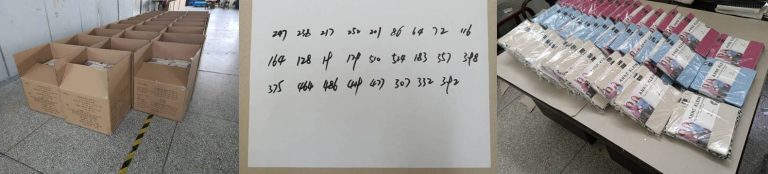
Amazon FBA guidelines cover important requirements for product dimensions, carton weight, packaging, labeling, and shipment preparation. For sellers sourcing products from China, these requirements should be checked carefully before goods leave the factory.
Fulfillment by Amazon (FBA) allows sellers to store inventory in Amazon fulfillment centers while Amazon handles order fulfillment, shipping, customer service, and returns. However, incorrect carton dimensions, excessive weight, unreadable labels, or unsuitable packaging can create delays, additional handling costs, or receiving problems.
Combining clear Amazon requirements with effective quality control in China can help sellers identify packaging and labeling problems before goods are shipped.
Understand the Difference Between Product and Shipping Carton Requirements
One common mistake is to treat product size and master carton size as the same issue.
Amazon uses product dimensions and shipping weight when determining product size tiers and fulfillment fees. Sellers therefore need accurate measurements of the finished, packaged retail unit.
At the same time, cartons used to send inventory into Amazon fulfillment centers must meet inbound shipment requirements.
For Amazon FBA shipments in the United States, Amazon increased the maximum standard shipping box dimensions in 2025 to:
- Maximum length: 36 inches
- Maximum width: 25 inches
- Maximum height: 25 inches
- Maximum standard carton weight: 50 lb
Exceptions may apply to cartons containing individual oversized or overweight products.
Because Amazon periodically updates its requirements, sellers should always confirm the latest rules in Seller Central before preparing a shipment.
Measure Carton Dimensions and Weight Accurately
Factories sometimes provide estimated carton dimensions or weights before production is completed. However, actual measurements can change after final packaging.
Differences may result from:
- Changes in carton size
- Additional protective materials
- Increased product weight
- Different packing quantities
- Accessories added during final packing
- Changes in inner packaging
Before shipment, actual carton dimensions and gross weight should therefore be measured rather than relying entirely on preliminary packing information.
During an Amazon FBA inspection, selected cartons can be measured and weighed to compare the actual results with the packing list and shipping information provided by the supplier.
Use Suitable Shipping Cartons
FBA shipping cartons should be strong enough to protect products during international transportation and handling within Amazon’s logistics network.
Cartons should generally be clean, undamaged and properly sealed. Excessively weak, crushed or poorly constructed cartons increase the risk of product damage.
There should also be sufficient protective material inside the carton to prevent products from moving excessively during transportation.
Depending on the product and buyer’s requirements, packaging checks may include:
- Carton condition
- Carton dimensions and gross weight
- Quantity per carton
- Inner packaging
- Protective materials
- Carton sealing
- Shipping marks
- Carton drop testing
Products containing glass, electronics, ceramics or other fragile components may require additional packaging protection.
Check FBA Labels and Barcodes
Correct labeling is another critical part of Amazon FBA preparation.
Each shipment carton sent to an Amazon fulfillment center requires the appropriate FBA box ID label. Amazon requires these labels to remain visible and scannable, and they should not be placed over carton seams or edges where they may be damaged when the carton is opened.
Product-level labels, including applicable FNSKU or barcode labels, should also be checked for correct content, placement and readability.
Typical inspection points include:
- Correct barcode
- Correct FNSKU where applicable
- Barcode readability
- Label position
- Country-of-origin marking
- Product labels
- Warning labels
- Carton shipping marks
Incorrect labels can create receiving delays or inventory identification problems after products arrive at the fulfillment center.
Verify Quantity and Packing Configuration
Amazon sellers should also confirm that actual packing quantities match the shipment plan.
Inspectors can compare the purchase order, packing list and physical goods to check:
- Total order quantity
- Quantity per carton
- Number of cartons
- SKU distribution
- Carton numbering
- Mixed or incorrect products
For orders containing multiple SKUs, particular attention should be paid to avoiding mixed products or incorrect labels.
Conduct a Pre-Shipment Inspection Before FBA Delivery
A pre-shipment inspection can combine ordinary product quality checks with FBA-specific packaging verification.
In addition to workmanship, dimensions, functionality and product specifications, inspectors can check carton measurements, gross weight, packing quantities, labels, barcodes and shipping marks before the goods leave the supplier.
If problems are identified, the seller can ask the factory to relabel, repack, sort or correct the shipment before international transportation begins.
This is generally much easier and less expensive than discovering packaging or labeling problems after the goods have arrived at an Amazon fulfillment center.
Reduce FBA Shipment Risks Before Shipping
Successful FBA preparation involves more than simply attaching an Amazon label to a carton. Sellers need to control product quality, retail packaging, master carton specifications, weight, dimensions, barcodes and shipment information.
Amazon requirements can change over time and may differ between marketplaces, so sellers should always use the latest Seller Central requirements for their destination market.
For Amazon sellers sourcing from China, combining accurate shipment preparation with independent inspection provides an effective final checkpoint before inventory enters the FBA network.