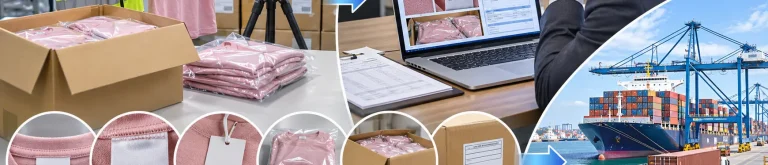
Selling products through Amazon FBA (Fulfillment by Amazon) requires more than manufacturing acceptable products. Sellers must also ensure that their inventory meets agreed quality specifications, packaging requirements, and applicable Amazon fulfillment center preparation rules.
When sourcing from Chinese factories, arranging an independent pre-shipment inspection helps sellers identify product defects, labeling mistakes, and packaging problems before inventory leaves the supplier.
The following seven checkpoints provide a practical inspection guide for Amazon FBA sellers preparing shipments from China.

1. Product Quality and Workmanship
Product quality remains the foundation of a successful Amazon FBA shipment. Defective products can lead to customer complaints, returns, and negative reviews.
Inspectors examine randomly selected products against approved samples and purchase specifications.
Typical checkpoints include:
- Scratches, stains, cracks, and visible manufacturing defects
- Incorrect colors, dimensions, materials, or finishes
- Poor assembly, loose components, or missing parts
- Functional failures under normal operating conditions
- Inconsistent workmanship between production units
Product-specific functional tests should be included whenever practical.
For random inspections, buyers can use ANSI/ASQ Z1.4 or ISO 2859-1 sampling plans with agreed AQL acceptance criteria.
2. Product Identification and FNSKU Labels
Incorrect product identification can create receiving problems and inventory discrepancies.
Inspectors verify that each product matches the intended SKU, variation, and approved labeling requirements.
Important checks include:
- Correct FNSKU or other applicable product barcode
- Barcode readability using a suitable scanner
- Accurate product names, variations, and identifiers
- Proper label placement and secure attachment
- No conflicting scannable barcodes where prohibited
Not every Amazon FBA product requires an FNSKU label. Labeling depends on the applicable barcode and inventory requirements.
Sellers should confirm current requirements in Amazon Seller Central before production and shipment.
3. Retail Packaging and Product Protection
Packaging must protect products during transportation, fulfillment center handling, storage, and final delivery.
Inspectors compare finished retail packaging with approved artwork and specifications.
Checks typically cover packaging dimensions, material strength, sealing quality, printed information, and protective inserts.
Products requiring additional protection, such as fragile goods or items containing liquids, should be checked against the applicable preparation instructions.
Poly bags, suffocation warnings, expiration dates, and other special requirements must be verified when relevant to the product.
4. Bundles, Sets, and Accessories
Products sold as bundles or multipacks require careful quantity and component verification.
A missing accessory or incorrect combination can make an otherwise acceptable product unsuitable for sale.
Inspectors should verify:
- Correct quantities within each retail package
- Complete accessories and instruction manuals
- Accurate color, size, and model combinations
- Proper sealing of multipacks and bundled products
- Consistency with the approved product listing
Where applicable, packaging should clearly identify products intended to be sold together.
5. Shipping Cartons and FBA Labels
Outer carton verification is an important part of Amazon FBA shipment preparation.
Inspectors check carton quantities, dimensions, gross weight, packing methods, and shipping marks against the approved packing list.
FBA shipment labels should be checked against the shipment plan supplied by the seller or logistics provider.
Each carton must carry the correct labels according to the applicable Amazon shipping workflow.
Inspectors should also identify damaged cartons, inadequate sealing, incorrect carton quantities, or packaging likely to fail during transportation.
6. Product Safety and Compliance Documentation
Products sold through Amazon must satisfy applicable legal and marketplace requirements.
Depending on the product category and destination market, relevant documents may include safety test reports, certificates, declarations, or other compliance records.
Inspectors can verify visible product markings, warning labels, manufacturer information, and supplied documentation against the buyer’s checklist.
However, a routine factory inspection does not replace laboratory testing, product certification, or Amazon’s compliance review.
Sellers remain responsible for confirming the requirements applicable to their products.
7. Inspection Results and Shipment Approval
Once inspection is completed, the buyer should review the report before authorizing shipment.
A useful report includes product quantities, sampling details, defect classifications, functional test findings, packaging observations, and supporting photographs.
If significant problems are identified, sellers should request corrective action from the supplier.
A follow-up inspection may be necessary to confirm that defects have been corrected.
For orders requiring stricter control, 100% product inspection can be considered instead of random sampling.
The final shipment decision should account for product quality, outstanding defects, packaging readiness, and applicable Amazon requirements.
Conclusion
An effective Amazon FBA inspection covers more than appearance and functionality. Product identification, barcode accuracy, packaging integrity, accessories, carton labeling, and compliance documentation are equally important.
By checking these details before shipment, sellers can reduce avoidable quality disputes, receiving problems, and customer complaints.
NBNQC provides independent inspection services across mainland China, helping Amazon sellers verify finished products and packaging before goods are dispatched to fulfillment centers.