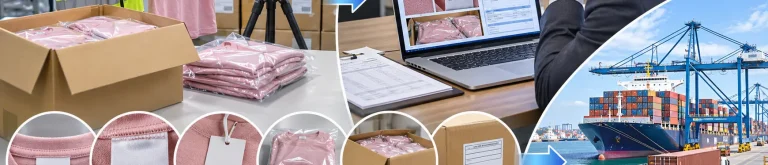
Selling products through Amazon FBA requires more than finding a reliable supplier and arranging international shipping. Product defects, incorrect labeling, inconsistent packaging, and specification errors can lead to customer complaints, returns, negative reviews, and additional costs.
For sellers sourcing from overseas manufacturers, effective quality control in China helps identify these problems before inventory reaches Amazon fulfillment centers. Understanding common quality risks and taking preventive action can protect both profitability and customer satisfaction.

1. Product Defects and Poor Workmanship
Manufacturing defects are among the most common problems affecting Amazon sellers. Depending on the product category, these may include scratches, stains, loose components, uneven stitching, incorrect assembly, or damaged surfaces.
Even minor cosmetic defects can affect customer satisfaction, particularly when buyers expect products to match listing photographs.
Before shipment, sellers should establish clear workmanship standards and provide approved samples or reference photographs. Inspectors can then compare finished products against these requirements and classify defects according to their severity.
2. Incorrect Product Specifications
Products that differ from advertised specifications can generate complaints even when they appear visually acceptable.
Common discrepancies include:
- Incorrect dimensions or weight
- Wrong materials or components
- Inconsistent colors or finishes
- Missing accessories
- Incorrect product variations
These problems are especially important for products sold in multiple sizes, colors, or configurations.
A structured pre-shipment inspection can verify product specifications against purchase orders, technical documents, and approved samples before goods leave the factory.
3. Functional Failures
A product may look acceptable but fail during normal operation. This is particularly relevant for electronics, household appliances, mechanical products, and items requiring assembly.
Depending on the product, inspection activities may include:
- Basic operational testing
- Assembly and fitting checks
- Button and switch functionality
- Charging or power-on verification
- Moving-part operation
- Basic durability checks
Testing procedures should reflect the product’s intended use and agreed specifications.
Specialized safety, electrical, chemical, or regulatory compliance testing may require accredited laboratory services rather than routine factory inspection.
4. Packaging That Fails to Protect Products
Inadequate packaging can cause damage during handling, transportation, and fulfillment operations.
Typical problems include weak cartons, insufficient cushioning, incorrect packing quantities, and damaged retail packaging.
For fragile or heavy products, sellers should pay particular attention to protective materials, carton strength, and product movement inside the packaging.
Where appropriate, inspectors can perform carton drop tests or other agreed packaging checks.
However, a satisfactory packaging inspection does not guarantee that damage cannot occur during transportation.
5. Incorrect Barcodes and FBA Labels
Labeling errors can create inventory identification problems and delays when products arrive at Amazon fulfillment centers.
Common issues include incorrect FNSKU labels, unreadable barcodes, misplaced carton labels, and mismatches between product variations and their assigned identifiers.
Before shipping, sellers should verify:
- Product barcode accuracy and readability
- Correct FNSKU labels where required
- Appropriate carton identification labels
- Country-of-origin markings
- Required warning and product information
Amazon’s labeling and shipment preparation requirements may vary by marketplace and product category. Sellers should confirm current requirements through Seller Central.
6. Quantity and SKU Mismatches
Incorrect shipment quantities can create inventory discrepancies, unexpected stock shortages, and fulfillment complications.
These problems frequently occur when factories handle multiple product variations or pack similar items together.
Inspectors can compare the purchase order, packing list, carton quantities, and SKU distribution against the actual goods.
For mixed-SKU shipments, additional attention should be given to carton identification and the separation of different product variations.
Accurate quantity verification helps sellers reduce avoidable receiving and inventory management problems.
7. Inconsistent Quality Between Production Batches
A successful initial order does not guarantee that subsequent production batches will maintain the same quality.
Factories may change raw materials, production workers, subcontractors, or manufacturing processes without adequately controlling the resulting variations.
For repeat Amazon orders, sellers should maintain approved reference samples and consistent inspection criteria.
Independent third-party inspection services can help monitor batch consistency, identify recurring defects, and verify whether corrective actions have been implemented.
How Amazon Sellers Can Reduce Quality Risks
An effective inspection strategy begins before production is completed.
Sellers should provide clear specifications, approved samples, packaging instructions, and relevant product requirements to their suppliers.
For routine pre-shipment inspections, ANSI/ASQ Z1.4 or ISO 2859-1 sampling plans can be used to assess finished production batches. Commonly selected AQL limits include Critical 0, Major 2.5, and Minor 4.0, although appropriate limits depend on product risks and buyer requirements.
For products with particularly strict quality expectations, full inspection may provide additional control by checking every available unit against the agreed inspection scope.
Inspection findings should be reviewed before authorizing shipment, allowing time for sorting, rework, or replacement where necessary.
Conclusion
Amazon FBA sellers face quality risks involving workmanship, functionality, specifications, packaging, labeling, and inventory accuracy.
Identifying these problems before shipment is generally more practical than resolving them after products enter the fulfillment network.
By establishing clear quality requirements, maintaining consistent supplier standards, and arranging independent inspections when appropriate, sellers can reduce preventable defects, improve shipment reliability, and protect their long-term business performance.