Climbing harnesses are essential safety equipment used in rock climbing, mountaineering, and other activities involving fall protection. Defects in load-bearing webbing, stitching, buckles, or attachment points can create serious safety risks.
For international buyers sourcing climbing equipment from China, a structured inspection process helps identify manufacturing defects, verify product specifications, and review compliance documentation before shipment.
This guide outlines seven important checkpoints for climbing harness inspection, including relevant international standards and practical quality control considerations.
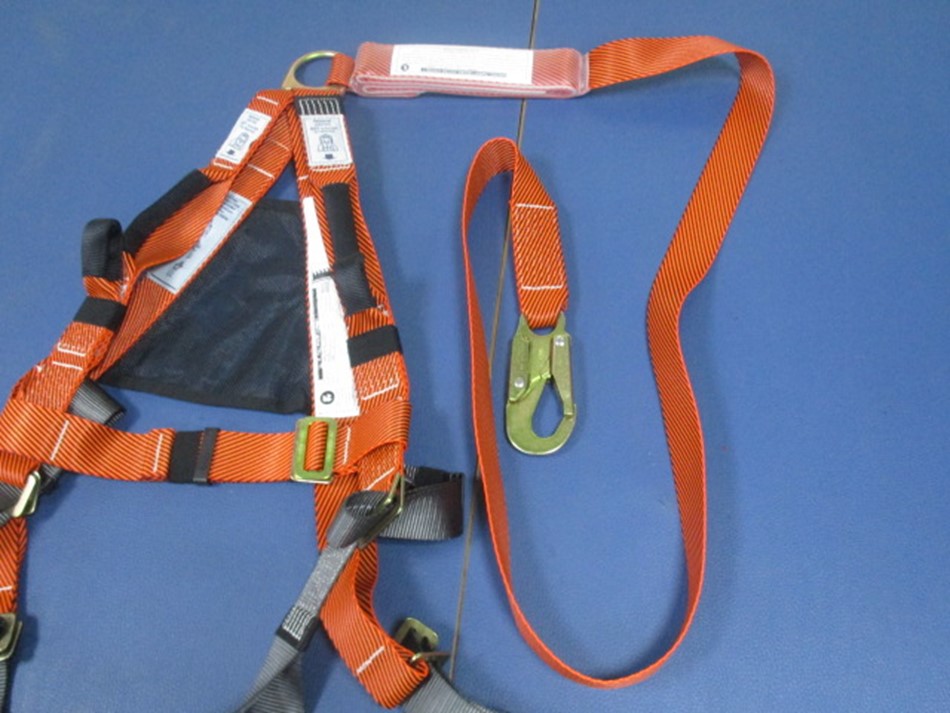
1. Verify Materials and Webbing Quality
Climbing harnesses commonly use nylon or polyester webbing designed to withstand demanding conditions.
During inspection, check the webbing for:
- Cuts, fraying, holes, or damaged fibers
- Uneven weaving and inconsistent thickness
- Stains, contamination, or chemical damage
- Incorrect webbing width or material specifications
- Visible deterioration around folded or reinforced areas
Inspectors should compare materials against approved samples and technical specifications.
Visual inspection can identify obvious defects, but material strength, UV resistance, and long-term durability require appropriate testing.
2. Examine Load-Bearing Stitching
Stitching is one of the most critical construction features of a climbing harness.
Inspectors should carefully examine load-bearing seams, particularly around waist belts, leg loops, belay loops, and attachment points.
Common defects include broken stitches, skipped stitches, loose threads, incorrect stitch patterns, and inconsistent reinforcement.
Stitching should match approved construction specifications, including thread type, stitch density, and reinforcement patterns.
Under EN 12277, safety-related stitching must also meet applicable visibility requirements.
Any suspected damage to load-bearing stitching should be treated as a serious safety concern rather than an ordinary cosmetic defect.
3. Inspect Buckles and Adjustment Systems
Buckles must allow secure adjustment while maintaining their intended position during use.
During third-party inspection in China, inspectors can examine accessible buckle components for visible defects and verify basic operation according to approved procedures.
Important checkpoints include:
- Cracks, deformation, corrosion, or sharp edges
- Incorrect buckle dimensions or assembly
- Difficulty adjusting waist or leg straps
- Improper threading or strap orientation
- Inconsistent operation between samples
Buckle slippage resistance and load-bearing performance require controlled testing under the applicable standard.
A buckle that operates normally during a manual check is not necessarily proven safe under climbing loads.
4. Check Attachment Points and Harness Construction
Tie-in points, belay loops, and other load-bearing connections require particular attention.
Inspectors should verify that all components are correctly positioned and assembled according to approved technical drawings.
Check for twisted webbing, incorrect assembly, damaged reinforcement, and differences from the approved design.
The harness type must also match its intended application.
EN 12277 distinguishes between full-body, small-body, sit, and chest harnesses, with different requirements for their construction and performance.
Critical assembly discrepancies should be investigated before shipment approval.
5. Review International Standards and Certification
Two important references for climbing harnesses are:
EN 12277:2015+A1:2018: Specifies safety requirements and test methods for mountaineering harnesses, including construction, strength, and performance.
UIAA 105: Establishes additional safety requirements for climbing and mountaineering harnesses based on relevant European standards.
Buyers should verify which standards apply to the product and destination market.
For products sold in the European Union, applicable personal protective equipment regulations may also require conformity assessment, CE marking, and supporting documentation.
Inspectors can review available certificates, test reports, product identification, and declarations for consistency.
However, document review alone cannot establish certification validity or replace testing by qualified laboratories and conformity assessment bodies.
6. Verify Labels, Instructions, and Traceability
Accurate labeling helps users identify the harness and understand its limitations.
A pre-shipment inspection should verify the required product markings and accompanying instructions.
Depending on applicable requirements, checks may include:
- Manufacturer or brand identification
- Product model, type, and size
- Year of manufacture and traceability information
- Applicable standard references and conformity markings
- Safety warnings and usage instructions
- Packaging identification and product quantities
Missing or incorrect safety information can create compliance risks, even when the product appears physically acceptable.
7. Establish Appropriate Inspection and Testing Procedures
Climbing harnesses are safety-critical products, so inspection plans should prioritize defects that could affect user protection.
Routine factory inspections can cover workmanship, dimensions, assembly, labels, packaging, and documentation.
However, strength testing, buckle slippage testing, and other safety performance evaluations require suitable equipment, qualified personnel, and controlled procedures.
Buyers should define acceptance criteria before production and arrange laboratory testing where required.
Critical safety defects should not be accepted merely because an AQL sampling plan permits a certain number of defects in other categories.
A reliable quality assurance process combines supplier controls, appropriate testing, independent inspections, and traceable production records.
Conclusion
Effective climbing harness inspection requires careful attention to materials, load-bearing stitching, buckles, attachment points, labeling, and applicable safety standards.
By combining factory-level quality checks with appropriate laboratory testing and certification verification, buyers can reduce manufacturing risks and make better shipment decisions.
NBNQC provides independent product inspection services across China, helping buyers assess workmanship, assembly, labeling, packaging, and other agreed inspection requirements before shipment.