Wobble cushions, also known as inflatable balance cushions or stability discs, are widely used for fitness training, balance exercises, and active seating. These products are typically made from flexible PVC or similar materials and feature an air-filled structure that creates an unstable surface for balance training.
For importers sourcing wobble cushions from China, checking appearance alone is insufficient. Air leakage, poor material quality, inadequate grip, and inconsistent inflation can affect product performance and user safety. A structured pre-shipment inspection helps buyers identify these issues before finished goods leave the factory.
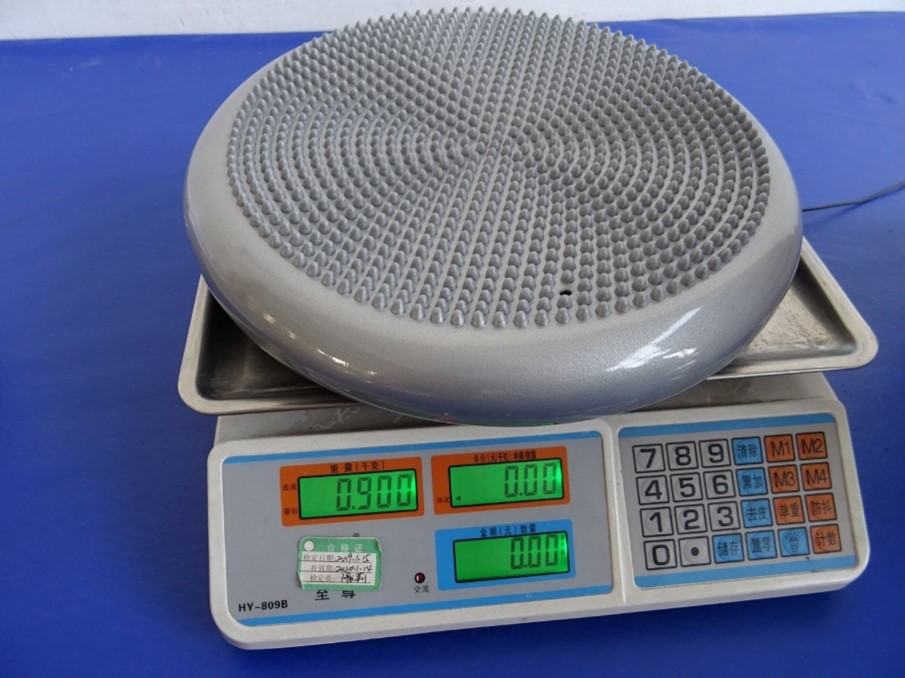
1. Appearance and Workmanship Inspection
Visual inspection is the first step in evaluating wobble cushion quality. Inspectors compare randomly selected products with approved samples and specifications.
Key checkpoints include:
- Surface scratches, stains, discoloration, and deformation
- Uneven molding, excessive flashing, or rough edges
- Air bubbles, cracks, pinholes, and material defects
- Inconsistent surface texture or massage spikes
- Incorrect colors, logos, or printed markings
Special attention should be given to molded seams and inflation valves, where manufacturing defects may lead to air leakage.
2. Dimensions and Weight Verification
Consistent dimensions help ensure that wobble cushions provide the intended support and balance characteristics.
Inspectors measure the cushion diameter, inflated height, and overall weight against approved specifications.
Measurements should be taken under consistent inflation conditions because air pressure can significantly affect cushion height and firmness.
Excessive dimensional variation may indicate inconsistent molding, incorrect inflation, or material differences between production batches.
3. Air Leakage and Pressure Retention Test
Air leakage is one of the most important functional defects in inflatable wobble cushions.
Inspectors inflate the cushions according to the manufacturer’s instructions and examine the valves, seams, and molded surfaces.
Typical checks include:
- Confirming that the inflation valve closes securely
- Checking for audible or visible air leakage
- Applying gentle pressure to identify obvious leakage
- Monitoring pressure or dimensional changes over an agreed period
A water immersion test may help locate leaks when permitted by the product specification.
For reliable results, buyers should establish clear pressure retention requirements and test durations before inspection.
4. Load-Bearing and Compression Test
Wobble cushions must withstand the loads associated with their intended applications.
During on-site functional testing, inspectors apply a specified load to evaluate the cushion’s response and structural integrity.
The test should verify that:
- The cushion supports the required load without failure
- The surface deforms consistently under pressure
- No seams rupture or valves become displaced
- The cushion recovers its shape after unloading
Load values, test duration, and acceptance criteria should follow the buyer’s specifications.
A short on-site compression test does not replace laboratory testing for long-term durability or maximum load capacity.
5. Anti-Slip and Stability Performance
Wobble cushions are intentionally unstable, but their contact surfaces should provide the grip specified for safe use.
Inspectors examine the molded texture and perform practical checks on suitable surfaces.
Important considerations include:
- Surface grip and resistance to unintended sliding
- Consistency of the textured or spiked surface
- Cushion movement under controlled loading
- Stability differences between inspected samples
Performance should be evaluated against the approved sample or defined test requirements rather than subjective expectations.
6. Material Quality and Flexibility
Material characteristics influence durability, flexibility, comfort, and overall product performance.
Inspectors check for abnormal stiffness, brittleness, unpleasant odors, surface defects, and inconsistent flexibility.
Repeated manual compression can help identify obvious material weaknesses, cracking, or poor recovery.
However, material composition, chemical restrictions, and long-term fatigue resistance generally require appropriate laboratory testing or supporting test reports.
Buyers should verify that the specified materials meet the requirements of their intended market.
7. Inflation Accessories and Packaging
Some wobble cushions are supplied with hand pumps, inflation needles, or other accessories.
Inspectors verify that all required accessories are included, correctly assembled, and functional.
Packaging checks should cover:
- Correct product quantity and assortment
- Appropriate inflation and usage instructions
- Accurate labels, barcodes, and shipping marks
- Proper protection against punctures and deformation
- Consistency with approved retail packaging
Missing accessories, incorrect instructions, or inadequate packaging can create customer complaints even when the cushion itself is acceptable.
8. Safety Requirements and Defect Classification
Safety-related checks should consider the product’s intended use, target users, and destination market.
Inspectors look for sharp edges, damaged valves, material cracks, and other visible hazards.
Where applicable, buyers should also verify relevant chemical safety requirements, labeling obligations, and supporting compliance documentation.
Defects may be classified as Critical, Major, or Minor according to their potential consequences and the agreed inspection criteria.
For random sampling inspections, an AQL sampling plan based on ISO 2859-1 or ANSI/ASQ Z1.4 can help buyers evaluate the overall quality of a production batch.
Conclusion
Wobble cushion inspection should combine visual examination, dimensional verification, air leakage checks, compression testing, and packaging inspection.
Clearly defined specifications and appropriate testing procedures are essential for identifying defects consistently.
NBNQC provides independent inspection services across mainland China, helping importers verify wobble cushion quality and make informed shipment decisions before goods leave the factory.