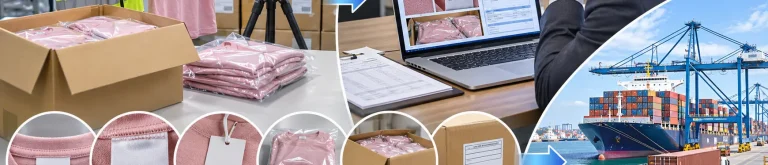
Developing a new product in China offers significant opportunities for international buyers, but it also introduces quality risks. Unclear specifications, inconsistent materials, manufacturing defects, and communication gaps can affect product quality and delay shipments.
Implementing effective new product quality control from the early development stage helps buyers identify potential problems before they become costly. Working with an independent inspection company provides additional oversight throughout the manufacturing process.
1. Establish Clear Product Specifications
Effective quality control begins before production starts. Buyers should provide manufacturers with detailed specifications that define the product’s materials, dimensions, appearance, functionality, packaging, and performance requirements.
Important documents may include:
- Technical drawings and dimensional tolerances
- Material specifications and approved components
- Color references and approved samples
- Functional and performance requirements
- Packaging, labeling, and marking instructions
- Applicable safety and regulatory requirements
An approved reference sample is particularly valuable for new products. It establishes a physical benchmark against which inspectors can compare production units.
Without clear specifications, manufacturers and buyers may interpret quality requirements differently, resulting in disputes or unexpected product variations.
2. Evaluate the Manufacturer Before Production
Selecting a capable manufacturer is essential when developing a new product.
A manufacturing audit can help buyers evaluate a supplier’s production capabilities, equipment, quality management procedures, workforce, and experience with similar products.
During an audit, inspectors may examine production facilities, incoming material controls, inspection records, equipment maintenance, and corrective action procedures.
The objective is to determine whether the manufacturer has appropriate systems and resources to meet the buyer’s requirements.
For technically demanding products, buyers should also consider prototype development capabilities, engineering support, and the manufacturer’s experience with relevant manufacturing processes.
3. Inspect Initial Production and Verify Materials
New products are particularly vulnerable to problems during initial production because manufacturing processes may not yet be fully established.
An Initial Production Check (IPC) is typically performed when approximately 0–20% of production has been completed.
Inspectors can verify whether the factory is using the correct materials, components, production methods, and approved specifications.
Typical checkpoints include material identification, product dimensions, workmanship, color consistency, and initial functional performance.
Discovering discrepancies at this stage allows manufacturers to make adjustments before large quantities of defective products are produced.
4. Monitor Quality During Mass Production
Even when initial production meets requirements, quality problems may develop as manufacturing continues.
During Production Inspection (DPI), generally conducted when approximately 20–80% of production is complete, helps buyers monitor product consistency and manufacturing performance.
Inspectors examine completed and partially completed products, review workmanship, verify dimensions, and conduct applicable on-site tests.
They may also identify recurring defects, evaluate production progress, and check whether previously identified problems have been corrected.
For new products with complex designs or demanding specifications, additional inspections at critical production stages may be appropriate.
This approach helps reduce the risk of discovering major quality problems only after production has finished.
5. Conduct Pre-Shipment Inspection
A pre-shipment inspection provides an independent assessment of finished products before they are released for shipment.
This inspection is generally performed when at least 80% of production is completed and sufficient finished, packed goods are available for representative sampling.
Typical inspection activities include:
- Quantity and product assortment verification
- Appearance and workmanship examination
- Dimensional and weight measurements
- Functional and performance testing
- Packaging and labeling verification
- Comparison with approved samples and specifications
For sampling inspections, ISO 2859-1 or ANSI/ASQ Z1.4 General Inspection Level II is commonly used. Acceptance Quality Limits (AQL) should be agreed upon before inspection.
For products with particularly high quality risks, buyers may consider 100% inspection instead of standard sampling.
6. Use Inspection Reports to Drive Improvements
Inspection reports should provide more than a simple pass-or-fail result.
A useful report includes inspection findings, defect classifications, measurements, test results, photographs, and clear descriptions of nonconformities.
Buyers should review the findings promptly and communicate required corrective actions to the manufacturer.
When significant defects are identified, corrective work and follow-up verification may be necessary before shipment approval.
Maintaining inspection records also helps buyers identify recurring quality problems and evaluate supplier performance over time.
Conclusion
Successful new product development requires quality control throughout the manufacturing process, not just before shipment.
Clear specifications, supplier evaluations, early production checks, ongoing monitoring, and final inspections help buyers reduce manufacturing risks and improve product consistency.
By combining effective supplier communication with independent third-party inspections, businesses can make better purchasing decisions and bring new products to market with greater confidence.