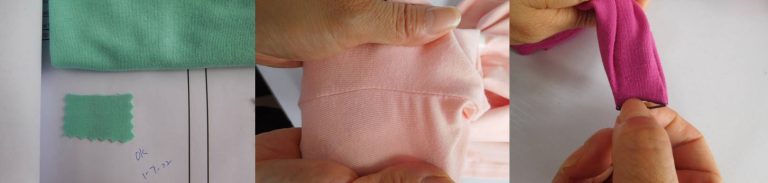
Garment quality depends on more than appearance. Stitching, fabric consistency, measurements, fasteners, labeling, and finishing all influence how clothing looks, fits, and performs during everyday use. For brands, importers, and retailers sourcing apparel from manufacturers, identifying defects before shipment can help reduce customer complaints, returns, and unnecessary costs.
A systematic garment inspection focuses on the details that determine whether finished clothing meets the buyer’s specifications and expected quality standards.
1. Examine Stitching and Seam Construction
Stitching is one of the most important indicators of garment workmanship. Uneven stitches, loose threads, skipped stitches, and inconsistent thread tension can affect both appearance and durability.
Inspectors should examine visible stitching and interior seams, paying particular attention to stress points such as armholes, crotches, pockets, waistbands, and shoulder seams. Open seams, broken stitches, and insufficient reinforcement may cause garments to fail during normal use.
Thread tension also deserves attention. Excessive tension can cause puckering, while insufficient tension may produce loose stitches or unstable seams. Buyers should evaluate these findings against the approved workmanship standard rather than judging appearance alone.
2. Check Zippers, Buttons, and Other Fasteners
Small components can cause significant problems when they are poorly attached or do not function correctly. Zippers should open and close smoothly without catching, separating, or becoming misaligned. Buttons, snaps, hooks, and other fasteners should be securely attached and positioned consistently.
Inspectors should operate functional components where appropriate and check for missing parts, damaged finishes, sharp edges, or visible deformation. For garments with elastic, drawcords, or hook-and-loop fasteners, relevant checks should confirm that these components perform as intended.
The inspection requirements should reflect the garment’s intended use. For example, closures on frequently worn jackets may require particular attention to durability and functionality.
3. Verify Fabric Quality, Color, and Appearance
Fabric defects can affect the entire garment and may be difficult to correct after production. Common problems include stains, holes, snags, uneven dyeing, fabric pulls, and visible differences in texture or thickness.
Buyers should compare bulk garments with the approved garment sample to verify fabric appearance, color, texture, pattern placement, and overall construction. For orders containing multiple colors or production lots, inspectors should also check for noticeable shade variations.
Printed graphics, embroidery, appliqués, and decorative details require separate attention. Their position, clarity, color, and finish should match the approved design. Any visible peeling, misalignment, missing elements, or inconsistent application should be recorded.
When specific material properties are important, additional testing may be necessary. Visual inspection alone cannot establish compliance with requirements such as fiber composition, colorfastness, or restricted chemical content.
4. Measure Garments Against Approved Specifications
Incorrect sizing is a common source of customer dissatisfaction. Even when garments look well made, inconsistent measurements can result in poor fit and increased returns.
Inspectors should use the latest measurement specification and follow the defined measurement points and methods. Depending on the garment type, checks may include chest width, body length, sleeve length, shoulder width, waist circumference, and inseam length.
The measured results should be compared with the specified garment measurement tolerances. A measurement that differs from the target is not automatically a defect if it remains within the permitted tolerance.
For orders containing multiple styles and sizes, the inspection plan should cover the relevant combinations rather than measuring only one representative garment. Results should be recorded clearly so that buyers can identify repeated deviations or inconsistent sizing.
5. Review Labels, Finishing, and Packaging
Labels and finishing details affect product presentation, traceability, and, where applicable, regulatory compliance. Inspectors should verify brand labels, size labels, care instructions, hangtags, barcodes, and other required information against the buyer’s instructions.
Common issues include incorrect size labels, missing care labels, inaccurate printed information, poorly positioned tags, and mismatched barcodes. Label content should not be assumed correct simply because the label is securely attached.
Finishing checks should cover hems, loose threads, seam ends, pocket alignment, symmetry, and the attachment of trims. Inspectors should also identify stains, pressing marks, wrinkles that exceed the agreed standard, and other visible defects.
Packaging checks may include folding methods, individual bags, size and color assortment, carton markings, and packing quantities. Incorrect assortment or labeling can create warehouse and distribution problems even when the garments themselves are acceptable.
6. Establish Clear Acceptance Criteria Before Shipment
Inspection findings are more useful when buyers define acceptance criteria before production is completed. Requirements should identify critical specifications, defect classifications, measurement tolerances, and any functional tests that must be performed.
For bulk orders, buyers can arrange a pre-shipment inspection to evaluate finished garments before shipment authorization. Sampling should follow the agreed inspection plan, while defects should be classified consistently according to the buyer’s requirements.
If significant problems are identified, the supplier should investigate the cause and complete corrective actions where necessary. Depending on the findings, buyers may request repairs, replacement units, sorting, or re-inspection before approving shipment.
Conclusion
Effective garment inspection combines careful workmanship checks with verification of fabric, fasteners, measurements, labeling, finishing, and packaging. Each check helps buyers identify a different category of risk, from visible defects to sizing inconsistencies and incorrect product information.
By establishing clear specifications and addressing problems before shipment, clothing buyers can improve product consistency, reduce avoidable returns, and protect their brand reputation. A structured inspection process also provides manufacturers with useful feedback for improving production quality over time.