Fabric quality directly affects the appearance, dimensions, durability and overall consistency of finished garments and textile products. Defects that are not identified before cutting can quickly become much more expensive problems once hundreds or thousands of pieces have entered production.
For importers and brands sourcing textiles from overseas suppliers, professional fabric inspection provides an important quality-control checkpoint before materials are approved for cutting, further processing or shipment.
Effective quality control should therefore include not only visual defect inspection, but also verification of roll quantity, shade, width, weight, construction and other buyer-defined specifications.
1. Quantity and Roll Identification
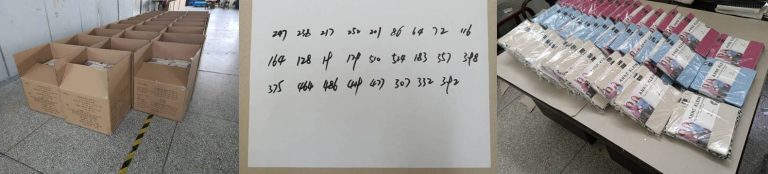
Fabric inspection normally begins with verification of the available quantity and roll information.
Inspectors can compare the physical goods against the packing list, purchase order or mill documentation and check:
- Number of rolls
- Declared roll length
- Color and dye lot
- Fabric code or item number
- Batch identification
- Packing and roll labels
For orders containing several colors or production lots, correct identification is particularly important because shade differences between dye lots may affect cutting and garment consistency.
2. Visual Fabric Defect Inspection
The fabric surface should be examined under suitable lighting using an inspection machine or other agreed inspection method.
Common woven and knitted fabric defects may include:
- Holes or tears
- Broken yarns
- Missing yarns
- Thick or thin yarns
- Slubs
- Knitting or weaving defects
- Oil marks
- Stains
- Creases
- Printing defects
- Uneven finishing
- Bowing or skewing
- Uneven selvages
Defects should be marked and recorded so that the buyer can understand their location, frequency and severity.
A professional fabric quality inspection should also consider whether defects are isolated or repeated throughout the roll. Repetitive defects may create a greater production risk even when each individual defect appears relatively minor.
3. The 4-Point Fabric Inspection System
The 4-Point System is one of the most commonly used methods for grading visible fabric defects.
Under this system, defects are assigned penalty points according to their size or severity, with a maximum of four points assigned to an individual defect. The total points are then calculated relative to the inspected fabric area.
ASTM D5430 provides recognized methods for visually inspecting and grading fabrics. However, buyers and suppliers should agree in advance on the scoring method, calculation basis and acceptance criteria because different grading options may produce different results.
The inspection report should therefore clearly state:
- Total inspected length
- Fabric width
- Number and type of defects
- Total penalty points
- Calculation basis
- Acceptance criteria
The 4-Point System evaluates visible fabric quality, but it should not be used as the only acceptance criterion. Shade variation, width, GSM or critical defects may require separate evaluation.
4. Shade and Color Consistency
Color variation is one of the most important risks in textile production.
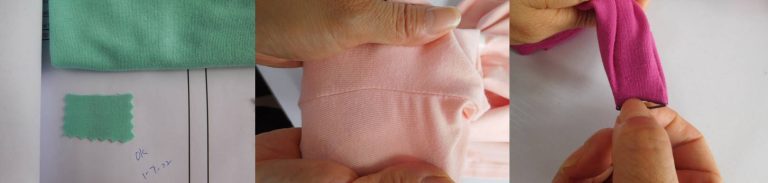
Inspectors may compare samples from different rolls, different sections of the same roll and different dye lots under controlled lighting conditions.
Checks may include:
- Roll-to-roll shade variation
- Side-to-side shade variation
- End-to-end shade variation
- Matching against an approved color standard
- Pattern or print color consistency
If significant shade differences are found, rolls should normally be identified separately so that incompatible shades are not mixed during cutting.
For color-sensitive products, buyers may also specify instrumental color measurement or laboratory testing.
5. Fabric Width, Weight and Construction
Physical measurements should be compared against the buyer’s specification.
Common checks include:
- Usable fabric width
- Total fabric width
- GSM or fabric weight
- Fabric thickness
- Weave or knit construction
- Pattern repeat
- Fabric orientation
- Bowing or skewing
GSM is particularly important because deviations may affect garment weight, hand feel, opacity, durability and material cost.
Measurements should be taken from representative samples rather than relying only on supplier-declared values.
6. Physical and Laboratory Testing
Some textile properties cannot be properly evaluated through visual inspection alone.
Depending on the product and buyer requirements, additional testing may include:
- Dimensional stability or shrinkage
- Color fastness
- Tensile strength
- Tear strength
- Pilling resistance
- Abrasion resistance
- Fabric composition
- Restricted substance testing
Simple checks may be performed on-site when suitable equipment is available, while more technical or chemical testing should be carried out by an appropriate laboratory.
A factory inspection should not be presented as a replacement for laboratory testing when formal performance or compliance results are required.
7. Packaging, Sample Retention and Reporting
Roll packaging should protect the fabric from moisture, contamination and handling damage.
Inspectors may check roll wrapping, labels, color identification, lot numbers and packing condition.
Representative samples can also be retained when required by the buyer for future comparison or laboratory testing.
At the end of the inspection, findings should be recorded clearly with photographs, measurements, defect details and test results.
Reducing Fabric Quality Risks Before Production
A professional third-party inspection company can help buyers identify fabric defects before defective material enters cutting, sewing or shipment.
Depending on the production stage, fabric inspection can be arranged during production, before cutting or before shipment.
The most effective approach combines clear specifications, approved color standards, agreed defect grading criteria and appropriate physical or laboratory testing.
By identifying problems at the fabric stage, buyers can request replacement, segregation, reprocessing or corrective action before those problems affect the finished product.