Medical protective apparel depends heavily on the integrity of its seams and sealed areas. Even when the main fabric provides adequate barrier performance, weak bonding, incomplete seam sealing, damaged tape, or small openings can reduce the protection provided by the finished garment.
For importers and buyers, effective quality control should therefore evaluate not only the fabric and general workmanship, but also the construction and sealing performance of critical seams. A structured product inspection can help identify visible manufacturing defects before shipment and verify whether production matches the approved specifications.
Why Sealing Performance Matters
Protective garments are commonly assembled using stitching, heat sealing, seam tape, ultrasonic welding, adhesive bonding, or combinations of these methods. These joining areas can become weak points if production parameters are incorrect or materials are incompatible.
Typical problems include incomplete bonding, insufficient seal width, wrinkles beneath seam tape, bubbles, lifting edges, excessive heating, damaged fabric, gaps, and inconsistent tape positioning.
For medical protective apparel, these defects may affect the garment’s intended barrier performance. They should therefore be treated as important inspection points rather than ordinary cosmetic workmanship issues.
1. Visual Inspection of Sealed Seams
Visual inspection is the first practical step during on-site quality control.
Inspectors should examine critical sealed areas for:
- Missing or incomplete seam tape
- Uneven tape positioning
- Lifted or loose tape edges
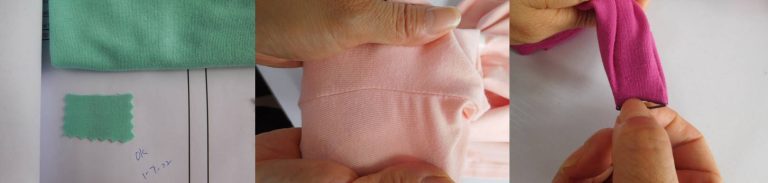
- Bubbles, wrinkles, folds, or trapped material
- Visible gaps along sealed seams
- Burn marks or material deformation caused by excessive heat
- Broken or exposed stitching
- Holes, cuts, punctures, or damaged fabric
- Poor sealing around intersections, corners, cuffs, hoods, and closures
Particular attention should be given to areas where several seams intersect because these locations are generally more difficult to seal consistently.
The workmanship should also be compared with the approved sample, technical specifications, drawings, or other buyer-approved references.
2. Seal Width and Position
The width and position of sealing tape or bonded seams should remain consistent throughout the garment.
Inspectors can measure selected sealing areas and compare them against the buyer’s specification. Significant variation may indicate unstable sealing equipment settings or inconsistent operator workmanship.
Seam tape should adequately cover the stitched or joined area without excessive deviation. Tape positioned too far from the seam may leave part of the construction insufficiently protected, while excessive overlapping can create unnecessary stiffness or affect garment appearance.
Measurements should be recorded where dimensional requirements are specified.
3. Adhesion and Bonding Quality
A sealed seam should remain properly bonded during normal handling and intended use.
During inspection, selected areas can be manually examined for loose edges, weak adhesion, delamination, or separation. If a buyer has specified an approved test method, suitable adhesion or seam-strength testing may also be performed using the appropriate equipment.
The objective is not simply to confirm that seam tape is present. Inspectors should determine whether the bond appears uniform and secure.
Weak adhesion can result from incorrect temperature, pressure, processing speed, incompatible materials, contamination, or inadequate surface preparation.
4. Material Compatibility
Sealing performance depends on the compatibility between the garment fabric, coating or membrane, seam tape, adhesive, and sealing process.
Incorrect heat-sealing parameters can damage coated or laminated fabrics even when the seam initially appears acceptable. Excessive temperature may cause melting, deformation, discoloration, or loss of material strength, while insufficient temperature or pressure may produce weak bonding.
During Garment & Apparel Quality Control, inspectors should compare the actual construction materials with approved samples and specifications whenever these references are available.
Unexpected changes in fabric, coating, seam tape, adhesive, or production process should be reported because they may affect both workmanship and performance.
5. Leak and Penetration Testing
Visual inspection alone cannot confirm whether every sealed seam provides the required barrier performance.
Where specified by the buyer, appropriate leak, hydrostatic pressure, liquid penetration, or other performance tests should therefore be conducted according to the applicable product specification or recognized test method.
Depending on the garment design and required protection level, testing may evaluate whether liquid penetrates through the material or seam construction under defined conditions.
Laboratory testing is generally more appropriate when formal compliance results are required. On-site testing during product inspection should only be used when the required method, equipment, conditions, and acceptance criteria have been clearly defined.
Inspectors should avoid replacing a specified laboratory method with an improvised test.
6. Workmanship and AQL Inspection
Sealing performance should be evaluated together with the garment’s overall workmanship.
Random samples may be selected according to the agreed inspection level and AQL requirements. Each selected garment can then be checked for sealing defects, sewing defects, damaged materials, contamination, incorrect construction, labeling issues, and other quality problems.
Defects should be classified according to their impact on safety, function, appearance, and compliance with the buyer’s requirements.
When a sealing defect can compromise the protective function of the garment, it may require a more serious defect classification than an ordinary cosmetic seam defect.
7. Pre-Shipment Verification
A Pre-Shipment Inspection is typically performed when most or all production has been completed and packaged.
For protective apparel, the inspection can verify:
- Product style and specifications
- Materials and workmanship
- Sealed seam condition
- Dimensions and construction
- Labels and markings
- Packaging and quantities
- Specified functional or on-site tests
- Overall conformity with the approved reference
Any significant sealing defects should be documented with clear photographs, location details, quantities, and defect descriptions so buyers can evaluate the shipment before release.
Practical Quality Control Approach
Reliable sealing performance requires control throughout production rather than relying only on a final visual check.
Manufacturers should maintain stable sealing parameters, approved materials, suitable equipment, and consistent workmanship. Buyers should provide clear specifications and acceptance criteria, while inspectors should verify that finished production matches those requirements.
Effective medical protective apparel inspection therefore combines material verification, workmanship assessment, sealed-seam inspection, measurement, appropriate performance testing, and clear defect reporting.
This approach gives buyers a more reliable basis for identifying manufacturing problems before shipment and determining whether additional testing, corrective action, or re-inspection is required.